Recently heard Talks
Here are some videos of talks that I enjoyed and/or learned something new from. Particularly the talks from the TED conferences are very educational, and often very entertaining. (See also this Wired article on TED 2009.) Some talks are more technical.Go to: 2026, 2025, 2024, 2023, 2022, 2021, 2020, 2019, 2018, 2017, 2016, 2015, 2014, 2013, 2012, 2011, 2010, 2009, 2008. [Compact list]
2026
- Susan Kare: Designing Icons & Graphics For the Original Mac (52 minutes)
- Rating: TTT+ (260819)
- Yann Collet: Beyond ZStandard: The Future of Data Compression (32.5 minutes)
- Rating: TTT (260114)
A talk at Open Source Summit Japan 2025, introducing the OpenZL compression framework, which is already in use at Meta. The idea is to get better compression by using knowledge about the format of the data. According to the speaker, this is necessary because we are close to the limit of what can be achieved with general purpose, lossless compression algorithms (like Zstandard), when both compression ratio and compression speed is important.
2025
- Ray Holt: Cal Poly Pomona IEEE: Ray Holt Presentation (47 minutes)
- Rating: TTT (251116)
Ray Holt worked on the world's first microprocessor, which was not the Intel 4004 released in 1971, but the MP944 designed at Garrett AiResearch Corp in 1968-1970, for use in the F14 fighter jet, and was a military secret until 1998. (The audio is not great, and the video shows just the lower left corner of the slides most of the time, and it ends before the talk is over.)
- Francesca Hogi: How to unlock your flirting superpowers (10.5 minutes)
- Rating: TTTT (251115)
- Roger 'arma' Dingledine: Stories from a Tor dev (43 minutes)
- Rating: TTT+ (251110)
Talk at DEF CON 33. - Gary Bernhardt: The Birth & Death of JavaScript (29.5 minutes)
- Rating: TTTT (251105)
The (part fictional) history of JavaScript from 1995 to 2035, presented at PyCon 2014. Mentions the paper Deconstructing Process Isolation regarding the cost of hardware memory protection. - Jane Goodall: What separates us from chimpanzees? (27 minutes)
- Rating: TTT (251002)
Presented at TED 2003. - Jonathan Corbet: Three decades in kernelland (36 + 5.5 minutes)
- Rating: TTTT (250910)
Presented at the Open Source Summit Europe, August 2025. - Niklaus Wirth: Reviving a computer system of 25 years ago (38+16.5 minutes)
- Rating: TTTT (250729)
Career retrospective presented at an event at ETH Zürich in 2014. - Peter McGraw: Stop telling single people to get married (11 minutes)
- Rating: TTT (250713)
- Lennart Augustsson: MicroHs, a tiny Haskell compiler (55+11 minutes)
- Rating: TTTT (250712)
A talk at ZuriHac 2025 about MicroHs. - Gabriella Gonzalez: How to market Haskell to a mainstream programmer (42 minutes)
- Rating: TTT (250623)
A 2020 talk applying ideas from the book Crossing the Chasm to Haskell. - Taylor Lynn Carpenter: Parkour! How the sport keeps your body and mind fit (6.5 minutes)
- Rating: TTTT (250413)
- Simon Thompson, Lennart Augustsson, Jeremy Gibbons, John Hughes: David Turner Memorial session at Lambda Days 2024 (49 minutes)
- Rating: TTTT (250222)
Phil Wadler also chimes in during the question part at the end. - Graham Hutton: Quicksort Algorithm in Five Lines of Code! (13 minutes)
- Rating: TTTT (250209)
OK, but five lines seems a bit excessive. It easily fits in one line of code:qsort(p:xs)=qsort[x|x<-xs,x<p]++p:qsort[x|x<-xs,x>=p];qsort[]=[]
2024
- Eric Wasl: Advent of Code – Behind the Scences (46 minutes)
- Rating: TTTT (241221)
A have had fun solving the Advent of Code programming puzzles every year since 2019, so it was interesting to hear the creator talk about his experience.
2023
- LTH Nobel Lecture with laureate Anne L'Huillier (48+31 minutes)
- Rating: TTTT (231230)
- Kevin H. Gary: Why you shouldn't trust boredom (11 minutes)
- Rating: TTTT (231128)
- Steve Jobs in 1995: The Future of Animation (26.5 minutes)
- Rating: TTTT (230426)
Steve Jobs talks about the making of Toy Story, the first movie made entirely with computer generated graphics. He also mentions some interesting mile stones achieved since the first ever movie was made 100 years earlier, in 1895.
2022
- Patrick Winston: How to Speak (63 minutes)
- Rating: TTTT (220427)
- Michael Snoyman: Your First Haskell Web App with WAI and Warp (43+4 minutes)
- Rating: TTTT- (220408)
From Functional Conf 2019. - Brian Kernighan: The early days of Unix at Bell Labs (48 minutes)
- Rating: TTTT (220127)
It's wonderful to hear Brian Kernighan talk about the history of Unix and the origin of some of the key ideas, notably pipes, which is at the core of the Unix philosophy of software design (and equavalent to function composition in functional programming). (Keynote presentation at linux.conf-au, found via lwn.net)
2021
- Grant Sanderson: Alice, Bob, and the average shadow of a cube (40 minutes)
- Rating: TTTT (211230)
Interesting math video about how to calculate the average size of the shadow of a cube or other convex object, and different approaches to problems solving. - Ben Eater: Why was Facebook down for five hours? (30.5 minutes)
- Rating: TTTT (211103)
Nice overview of how DNS and BGP works. - Vladislav Zavialov: Introduction to GUI programming in Haskell (39.5 + 11 minutes)
- Rating: TTTT (211014)
Programming a small GUI application in Haskell in implerative style, using the gi-gtk binding to GTK+ and the nix package manager (not cabal, not stack) on macOS to avoid dependency hell. (There is also gi-gtk-declarative). - Joachim Breitner: Thunks, Sharing, Laziness: The Haskell Heap Visualized (52.5 minutes)
- Rating: TTTT (211014)
A demo of ghc-vis. - Stephanie Weirich: How to implement the lambda calculus, quickly (50+18 minutes)
- Rating: TTTT (210908)
IFL 21 keynote. The title is slightly misleading, since it's actually about how to handle binders and substitution in a simple, correct and efficient way, rather than finding the best way to normalize lambda calculus terms. The starting point is λ-calculus cooked four ways, an unpublished paper by Lennart Augustsson. - Ben Eater: How does a USB keyboard work? (34 minutes)
- Rating: TTTT (210819)
Compared to PS/2, USB seems horrendously complicated, yet at the same time incredibly dumb. There is no way for a USB device to tell the computer when it has new input, so the computer has to poll devices like keyboards regularly (e.g. every 16ms or every 1m) to find out if a key has been pressed… - Steve Blackburn: MPLR 2020 Keynote (41 minutes)
- Rating: TTT+ (210721)
A mostly non-tecknical talk about the history of MMTK, a library of garbage collection algorithms, from its origin in the late 1990s until today. MMTK showed that it it possible to reduce code complexity and improve performance at the same time. Interestingly, it was reimplemented in Rust a few years ago. - Aaron Contorer (CEO of FP Complete): Functional Programming and Modern DevOps (37.5 + 27.5 minutes)
- Rating: TTT (210329)
Explaining the benefits of functional programming to managers. - Benno Rice at linux.conf.au: What UNIX Cost Us (33.5 minutes)
- Rating: TTT (210324)
- Benno Rice at linux.conf.au: The Tradgedy of systemd (36 + 11 minutes)
- Rating:TTT (210324)
- Minutephysics: Why Do Boats Make THIS Pattern? (3.5 minutes)
- Rating: TTTT (210321)
Very nice explanation of why boat wakes look the way they do! - José Manuel Calderón Trilla: What About the Natural Numbers? (45.5 minutes)
- Rating: TTTT (210303)
A talk at PapersWeLove 2019 based on a 1989 paper by Colin Runciman. - Thorsten Altenkirch: The power of Π (36 + 6.5 minutes)
- Rating: TTT (210203)
A talk at Lambda Days 2020. - Koen Claessen: Finger Trees Explained Anew, and Slightly Simplified (23.5 minutes)
- Rating: TTTT (210105)
A Functional Pearl presented at the Haskell Symposium 2020.
2020
- Barry Schwartz: What role does luck play in your life? (10 minutes)
- Rating: TTTT (200923)
2019
- Matt Evans: The Ultimate Acorn Archimedes talk (54+5 minutes)
- Rating: TTT+ (191230)
- Brian Kernighan interviews Ken Thompson (55 minutes)
- Rating: TTTT (190902)
About the origins of Unix, C and things like pipes and grep. And about Ken Thompson's chess computers. See also Unix at 50: How the OS that powered smartphones started from failure. - Minutephysics: How Quantum Computers Break Encryption | Shor's Algorithm Explained (16 minutes)
- Rating: TTTT (190501)
No need to worry about quantum computers just yet.
- Sarah T. Stewart: Where did the Moon come from? A new theory (11 minutes)
- Rating: TTTT (190313)
The visualisation of the simulation that shows the collision from which the moon was formed starts at 8:30. A collision can turn a fast-spinning planet into a so-called synestia: an object that no longer has a solid spherical surface… - Sebastian Fischer: A Play on Regular Expressions (17 + 2 minutes)
- Rating: TTTT (190311)
A functional pearl from ICFP 2010. Paper: regexp-play.pdf. Source code: weighted-regexp. - Mathias Basner: Why noise is bad for your health — and what you can do about it (10 minutes)
- Rating: TTT (190212)
Make low noise a priority! - The 8-Bit Guy: Documentary - The Sinclair ZX80, ZX81, and Timex Sinclair 1000 (21.5 minutes)
- Rating: TTTT (190127)
My first computer was the Sinclair ZX-81, which I bought as a kit and assembled myself. Fairly soon I also got the ZX-81 ROM upgrade and the 16K RAM expansion. - Shohini Ghose: Quantum computing explained in 10 minutes (10 minutes)
- Rating: TT (190115)
- Franklin Leonard: How I accidentally changed the way movies get made (16.5 minutes)
- Rating: TTTT (190102)
How much of "conventional wisdom" is all convention with no wisdom? And at what cost? - Suzie Sheehy: The case for curiosity-driven research (9.5 minutes)
- Rating: TTTT (190102)
History tells us that if we can remain curious and open-minded about the outcomes of research, the more world-changing our discoveries will be.
- Li Wei Tan: The fascinating science of bubbles, from soap to champagne (14.5 minutes)
- Rating: TTT (190102)
- Jakob Magolan: A crash course in organic chemistry (16-2 minutes)
- Rating: TTT (190102)
Skip the first 2 minutes.
2018
- Kirsty Duncan: Scientists must be free to learn, to speak and to challenge (14 minutes)
- Rating: TTTT (181021)
Canada has a Minister of Science! - Edwin Brady: Type-Driven Development in Idris (46.5 minutes)
- Rating: TTTT (181016)
- Rich Hickey: Simple made easy (61 minutes)
- Rating: TTT+ (181016) [The slides are not visible in the video]
Easy (near, familiary) is subjective, simple (unentangled) is objective. Complex (intertwined) is the opposite of simple. Complexity slows you down long-term. Benefits of simplicity: ease of understanding, easy of change, easier debugging, flexibility, modularity. State & objects are complex. Values are simple. Methods are complex. Functions are simple.Having state in a program is never simple.
Code organisation does not mitigate it (unless it is completely encapsulated like in the ST monad).The first step in getting a simpler life is to choose simpler stuff
(simpler tools). Abstraction. Separating how from what.Alternative video: Simplicity Matters (shorter, with slides, but less explanation).
- Tommy McCall: The simple genius of a good graphic (6 minutes)
- Rating: TTT (181016)
Oracy, literacy, numeracy, graphicacy. - Liv Boeree: 3 lessons on decision-making from a poker champion (6 minutes)
- Rating: TTT (181009)
- Christine Porathat: Why being nice to your coworkers is good for business (15.5 minutes)
- Rating: TTT+ (181009)
Incivility makes people less motivated. It affects both victims of incivility and witnesses. People exposed to rudeness take longer to make decisions and make more errors. - The 8-bit Guy: Commodore History Part 5 - The C128 (31.5 minutes)
- Rating: TTTT (181005)
Also: Commodore 128D Restoration (14.5 minutes). - Melinda Epler: 3 ways to be a better ally in the workplace (9.5 minutes)
- Rating: TTT (181005)
- Michel Dugon: The secrets of spider venom (13 minutes)
- Rating: TTT (181005)
- Kees Cook: Making C less dangerous [Slides] (25+9 minutes)
- Rating: TTT (180907)
LWN: C considered dangerous. It's good that people acknowledge this fact, and that they are trying to do something about the problem, but the better move would obviously be to abandon unsafe languages like C, and use languages that allows things to be checked at compile time, instead of waiting for hardware support for efficient run-time checking. I'd rather have bug-free software than software that crashes all the time because of out-of-bounds memory accesses. Recent work (OSDI'18: The benefits and costs of writing a POSIX kernel in a high-level language) shows that using a high-level language instead of C is practical, with a performance overhead of only 5-15%. - Jaron Lanier: How we need to remake the internet (15 minutes)
- Rating: TTT++ (180830)
I can't call these things social networks anymore, I call them behavioural modification empires
.Of the big tech companies, it's really only two that depend on behavior modification and spying as their business plan. It's Google and Facebook.
We cannot have a society in which, if two people wish to communicate, the only way that can happen is if it's financed by a third person who wishes to manipulate them
.In the meantime, if the companies won't change, delete your accounts, OK?
. - Mary Lou Jepsen: How we can use light to see deep inside our bodies and brains (17 minutes)
- Rating: TTT+ (180830)
- Stephen DeBerry: Why the "wrong side of the tracks" is usually the east side of cities (7 minutes)
- Rating: TTTT (180821)
- Tina Seelig: The little risks you can take to increase your luck (11.5 minutes)
- Rating: TTT (180816)
- The 8-Bit Guy: Commodore History Part 4 - The Plus4, C16, and C116 (29 minutes)
- Rating: TTT (180801)
- The 8-Bit Guy: Commodore History Part 3 - The Commodore 64 (complete) (35 minutes)
- Rating: TTTT (180523)
This video revises and extends part 1. Also mentions the Educator 64, a C-64 in a PET case (which was not a success…) - Simone Giertz: Why you should make useless things (12 minutes)
- Rating: TTT+ (180509)
- Filmmaker IQ: The Science of Camera Sensors (13 minutes)
- Rating: TTTT (180424)
- Greg Gage: Electrical experiments with plants that count and communicate (9.5 minutes)
- Rating: TTT (180308)
- Petter Johansson: Do you really know why you do what you do? (16 minutes)
- Rating: TTTT (180306)
Results in experimental psychology from The Choice Blindness Lab, presented at TEDxUppsalaUniveristy. It is disturbing how easy it is to trick people into justifying the opposite of the choice they originally preferred. - The 8-Bit Guy: Commodore History Part 3 - The Commodore 64 (Part 1) (20 minutes)
- Rating: TTT (180305)
The Commodore 64 computer was preceded by the Commodore Max gaming system, which contained the same CPU, video and sound chips, but had only 2K RAM and no BASIC interpreter. Not many of those were sold...
2017
- Simon Peyton-Jones: Escape from the ivory tower: the Haskell journey (64 minutes)
- Rating: TTTT (171218)
- Tom Murphy VII: Compiling C to printable x86, to make an executable research paper (25.5 minutes)
- Rating: TTTT (171130)
A C compiler called ABC, implemented in Standard ML, targeting the subset of the 16-bit Intel instruction set that contains only printable ASCII characters. - Ronald Minnich, Google: Replace Your Exploit-Ridden Firmware with Linux (27 + 11 minutes)
- Rating: TTTT
This talk explains some stuff that can make you feel rather uncomfortable using computers with Intel processors inside... Slides from the talk - The 8-Bit Guy: Commodore History Part 1 - PET (20 minutes)
- Rating: TTTT (171009)
Very nice presentation of the Commodore PET, which was the computer I used in school for three years (Kongahällaskolan, 1981-1983). - The 8-Bit Guy: Commodore History Part 2 - The VIC 20 (28 minutes)
- Rating: TTTT (171009)
Very nice presentation of the VIC-20, which was my 2nd home computer (after the Sinclair ZX-80). - Anindya Kundu: The boost students need to overcome obstacles (7 minutes)
- Rating: TTT (171004)
Grit. Agency. Support. - Helen Pearson: Lessons from the longest study on human development (12.5 minutes)
- Rating: TTTT- (171004)
What factors determine if a child grows up to live a happy and healthy life? Being born into poverty is a big disadvantage, but "good parenting" helps to some extent. - Gabriela González: How LIGO discovered gravitational waves — and what might be next (13.5 minutes)
- Rating: TTT+ (171004)
- Adam Alter: Why our screens make us less happy (9.5 minutes)
- Rating: TTT+ (170716)
The stopping cues have gone missing... - Niki Vazou: Liquid Types for Haskell (46.5 + 6.5 minutes)
- Rating: TTT+ (170615)
From the 2016 Compose conference. See also the slides with live code and www.refinement-types.org for more info. - Tim Cook: The 2017 MIT Commencement Speech (16.5 minutes)
- Rating: TTTT (170613)
A great speech, and it also reminded me to rewatch Steve Jobs' 2005 Stanford Commencement Address. - Dan Bricklin: Meet the inventor of the electronic spreadsheet (12 minutes)
- Rating: TTTT (170525)
Software pioneer, see also Dan Bricklin's Web Site. - Jia Jiang: What I learned from 100 days of rejection (15.5 minutes)
- Rating: TTTT (170516)
See also 100 Days of Rejection. - Elon Musk: The future we're building — and boring (41 minutes)
- Rating: TTTT (170511)
- Mandy Len Catron: A better way to talk about love (15.5 minutes)
- Rating: TTT (170509)
- Sofia Jawed-Wessel: The lies we tell pregnant women (15 minutes)
- Rating: TTT (170509)
- Laura Vanderkam: How to gain control of your free time (12 minutes)
- Rating: TTT+ (170509)
I don't have time = It's not a priority. There is 168 hour in a week: 40 hours of work, 56 hour of sleep, 72 hours for other things. - Adam Grant: Are you a giver or a taker? (13.5 minutes)
- Rating: TTTT (170427)
"And let's face it, you all know you can learn a lot about character by watching how someone treats their restaurant server or their Uber driver." - Adam Grant:
The surprising habits of original thinkers (15.5 minutes)
- Rating: TTTTT (170426)
"Procrastination gives you time to consider divergent ideas, to think in nonlinear ways, to make unexpected leaps".
"As Aaron Sorkin put it: you call it procrastinating, I call it thinking."
"Procrastinating is a vice when it comes to productivity, but it an be a virtue for creativity."
"It's about being the kind of person who takes the initiative to doubt the default and look for a better option." - Adam Grant: The power of powerless communication (18 minutes)
- Rating: TTT++ (170426)
Also: 7 ways to use the power of powerless communication. - Katie Bouman: What does a black hole look like? (13 minutes)
- Rating: TTT+ (170404)
Update, April 2019: the first photo of a black hole, interpolated from sparse radio telescope data, has been published. See eventhorizontelescope.org. - Atze van der Ploeg at ICFP 2015: Forget the past, change the future, FRPNow! (16+4.5 minutes)
- Rating: TTT (170315)
- John Huges & John Peterson at ICFP 2015: Tribute to Paul Hudak (55+4 minutes)
- Rating: TTTT (170315)
- Joey Hess: Type-driven configuration management with Propellor (46 minutes)
- Rating: TTT (170208)
Propellor is a Haskell library that provides an ESDL for (virtual) host configuration. It uses types to avoid certain configuration errors. A certain amount of type-level programming is used to keep track of various configuration properties in the types. The lack of subtypes in Haskell seems to cause some loss of elegance (e.g. DebianLike does not imply UnixLike). Another linux.conf.au talk. - A Sudoku Solved in APL (9 minutes)
- Rating: TTTT (170124)
9 lines of code is all you need. www.tryapl.org - Robert "r0ml" Lefkowitz: Keeping Linux Great (52 minutes)
- Rating: TTTT (170124)
Liberal Software — a modern take on open/free software, which apparently is in decline (just check out the google trends and you will see). A talk by a Haskell programmer who thinks that both object orientation and open source software has failed to deliver the freedom that Richard Stallman wanted. (This is just one of many linux.conf.au talks.)
2016
- Jason Santa Maria: On Web Typography (52.5 + 6 minutes)
- Rating: TTT+ (161103)
Some interesting points, but it seemed like he could have conveyed them equally well in a 30 minute talk. His slides are shown in a in a tiny 430*320 pixel box in the corner of the 720p video, too small to see the typographical details in many of the examples. - Wanis Kabbaj: What a driverless world could look like (11.5 minutes)
- Rating: TTTT- (161031)
- Tasos Frantzolas: Everything you hear on film is a lie (16.5 minutes)
- Rating: TTT+ (161031)
- Christopher Soghoian: Your smartphone is a civil rights issue (6 + 1.5 minutes)
- Rating: TTT (161031)
- Helen Fisher: Technology hasn't changed love. Here's why (13+6 minutes)
- Rating: TTTT (161010)
One interesting point: cognitive overload happens when we need to choose between more than 5-9 things, and it means we might not choose anything. - Rainn Wilson: Ideas worth dating (4.5 minutes)
- Rating: TTT (161009)
- John McWhorter: 4 reasons to learn a new language (10 minutes)
- Rating: TTT+ (161009)
- David Burkus: Why you should know how much your coworkers get paid (7.5 minutes)
- Rating: TTT (161003)
Information asymmetry. Pay transparency. - M.M.T Chakravarty: Playing with Graphics and Animations in Haskell (41+3 minutes)
- Rating: TTTT (160929)
Keynote presentation at the C◦mp◦se :: Conference. See also the Fractals chapter in his Haskell tutorial. - Anthony Goldbloom: The jobs we'll lose to machines — and the ones we won't (4.5 minutes)
- Rating: TTT (160914)
Machine learning apparently won't change this: machines will be good at handling routine tasks, but bad at novelty. - Julie Lythcott-Haims: How to raise successful kids — without over-parenting (14 minutes)
- Rating: TT+ (160914)
Make them to chores. Make sure they learn self-efficacy. - Kang Lee: Can you really tell if a kid is lying? (13.5 minutes)
- Rating: TTTT (160914)
No. But I sure Kang Lee will soon have some products you can buy to help with that. - Chris Anderson: TED's secret to great public speaking (8 minutes)
- Rating: TTTT (160912)
- Focus on one major idea.
- Give people a reason to care. Stir curiosity with intriguing questions.
- Build your idea with familiar concepts. Metafors. Aha moments.
- Make your idea worth sharing.
- Tabetha Boyajian: The most mysterious star in the universe (14 minutes)
- Rating: TTTT (160912)
- James Veitch: The agony of trying to unsubscribe (7.5 minutes)
- Rating: TTTT (160912)
- Manuel Chakravarty: Do Extraterrestrials Use Functional Programming? (50+4 minutes)
- Rating: TTT (160803)
- Brian McKenna: Roy - rescuing JavaScript from itself (17 minutes)
- Rating: TTT+ (160802)
Roy is a statically typed purely functional language that compiles to JavaScript. - WWDC 2016: Introducing Apple File System (36.5 minutes)
- Rating: TTT (160620)
Apple is planning to replace the old HFS+ file system with a modern file system called APFS. Most features (file cloning, snapshots, space sharing) are familiar from other modern file system (BTRFS, ZFS), so this is mostly Apple catching up to the state of the art. (And it's about time!)Two unique (I think) features are atomic renaming of directories on top of other directories, and per extent encryption.
Hard links to directory will not be supported. This is something that has been essential for the incremental backups used in Time Machine backups, but file cloning and snapshots will obviously be a much better way to implement Time Machine backups.
See also this article on arstechnica.com.
- ShaoLan: The Chinese zodiac, explained (6 minutes)
- Rating: TTT (160619)
- Stephanie Weirich: Depending on Types (45 minutes)
- Rating: TTT (160505)
From Code Mesh in London, November 2015. Similar to the invited talk at ICFP 20124 in Göteborg. - Linus Torvalds: The mind behind Linux (21.5 minutes)
- Rating: TTTT (160415)
Linus Torvalds is interviewed by Chris Anderson. - John Hughes: Erlang Factroy SF 2016 - Keynote - Why Functional Programming Matters (61 minutes)
- Rating: TTTT (160313)
A nice perspective of the history and importance of functional programming, from 1940 until today. Mary Sheeran and John Hughes also gave a variant of this talk at Code Mesh in London in November 2015. - Allan Adams: What the discovery of gravitational waves means (11 minutes)
- Rating: TTTT (160229)
- Bambi Cantrell: From Brides to Babies (19 minutes)
- Rating: TTT (160224)
- Scott Dinsmore: How to find work you love (18 minutes)
- Rating: TT+ (160222)
You are the average pf the 5 people you spend the most time with.
(Jim Rohn). Live Your Legend. - Mandy Len Catron: Falling in love is the easy part (14 minutes)
- Rating: TT (160222)
- rahra: The Ultimate Amiga 500 Talk [32c3] (53 minutes)
- Rating: TTT (160209)
- Rob Joyce: USENIX Enigma 2016 - NSA TAO Chief on Disrupting Nation State Hackers (35 minutes)
- Rating: TTTT (160206)
2015
- Moshe Vardi: The SAT Revolution: Solving, Sampling, And Counting (56 minutes)
- Rating: TTTT (151228)
- Sandrine Thuret: You can grow new brain cells. Here's how (11 minutes)
- Rating: TTTT (151214)
The hippocampus (an area in the brain which is important for mood, memory and learning) can grow around 700 new neurons per day. But what we do and what we eat affects how fast they grow. - Barry Schwartz: The way we think about work is broken (8 minutes)
- Rating: TTTT (151214)
- Alec Soth + Stacey Baker: This is what enduring love looks like (10.5 minutes)
- Rating: TTT (151214)
- Johann Hari: Everything you think you know about addiction is wrong (14.5 minutes)
- Rating: TTTT (151210)
We shouldn't call it addiction, we should call it bonding, he says. Portugal has reduced drug problems by decriminalising all drugs and creating support programs to help people with drug problems reconnect and find purpose in life. - Andreas Ekström: The moral bias behind your search results (9.5 minutes)
- Rating: TTTT (151210)
- Harald Haas: Forget Wi-Fi. Meet the new Li-Fi Internet (7.5 minutes)
- Rating: TTT+ (151210)
Reporting on some progress since his 2011 TEDGlobal talk. - Raymond Wang: How germs travel on planes — and how we can stop them (6.5 minutes)
- Rating: TTT+ (151210)
- Susan Spence: Programming with non-volatile memory; Hewlett Packard Labs makes it easy HPE Discover (19 minutes)
- Rating: TTT (151207)
- Patience Mthunzi: Could we cure HIV with lasers? (4.5 minutes)
- Rating: TTT (151001)
- Christopher Soghoian: How to avoid surveillance ... with the phone in your pocket (6.5 minutes)
- Rating: TTTT (151001)
- Laura Schulz: The surprisingly logical minds of babies (17.5+3 minutes)
- Rating: TTTT (151001)
- James Pearce at OSCON 2015: How Facebook open-sources at scale (13.5 minutes)
- Rating: TTT (150728)
- Jimmy Carter: Why I believe the mistreatment of women is the number one human rights abuse (16.5 minutes)
- Rating: TTT+ (150703)
- Chris Urmson: How a driverless car sees the road (15.5 minutes)
- Rating: TTT+ (150703)
- Andrew Tanenbaum: A reimplementation of NetBSD using a MicroKernel (talk) + (Q&A) (57+13 minutes)
- Rating: TTT+ (150622)
About how MINIX 3 now is a mostly NetBSD compatible system built on top of a microkernel, and the reliability and security advantages that comes with that. - Donald Hoffman: Do we see reality as it is? (22 minutes)
- Rating: TTT+ (150614)
- Bill Gross: The single biggest reason why startups succeed (6.5 minutes)
- Rating: TTTT (150607)
The idea, the team, the timing, the funding or the business model? Which one is it? - Esther Perel: Rethinking infidelity ... a talk for anyone who has ever loved (21.5 minutes)
- Rating: TTT (150521)
- Greg Gage: How to control someone else's arm with your brain (6 minutes)
- Rating: TTTT (150429)
www.backyardbrains.com! - Nick Bostrom: What happens when our computers get smarter than we are? (16.5 minutes)
- Rating: TTTT (150428)
- Edward Kmett: Stop Treading Water: Learning to Learn (41 minutes)
- Rating: TTT+ (150428)
- Guy Winch: Why we all need to practice emotional first aid (17.5 minutes)
- Rating: TTTT (150401)
- Dame Stephanie Shirley: Why do ambitious women have flat heads? (13.5 minutes)
- Rating: TTTT (150331)
Who would have guessed that the programming of the black box flight recorder of supersonic Concorde would have been done by a bunch of women working in their own homes?
- Joseph DeSimone: What if 3D printing was 100x faster? (10.5 minutes)
- Rating: TTTT (150326)
- Robyn Stein DeLuca: The good news about PMS (14.5 minutes)
- Rating: TTTT (150326)
PMS is mostly a myth, but it supports a very profitable industry. Men has as many and as severe mood swings as women. - Andy Yen: Think your email's private? Think again (12 minutes)
- Rating: TTT (150316)
Protonmail. - Niel D Jones: Programs = Data = First-Class Citizens in a Computational World (43+10 minutes)
- Rating: TTTT (150305)
Halmstad Colloquium. - Hannah Fry: The mathematics of love (17 minutes)
- Rating: TTTT (150226)
- Will Stephen: How to sound smart in your TEDx Talk (6 minutes)
- Rating: TTTT (150220)
Nothing. :-) - Tom Wujec: Got a wicked problem? First, tell me how you make toast (9 minutes)
- Rating: TTT (150212)
- Ben Ambridge: 10 myths about psychology: Debunked (15 minutes)
- Rating: TTTT (150205)
- Sarah Bergbreiter: Why I make robots the size of a grain of rice (6 minutes)
- Rating: TTT (150122)
2014
- Erin McKean: Go ahead, make up new words! (7 minutes)
- Rating: TTT+
- Michael Rubinstein: See invisible motion, hear silent sounds. Cool? Creepy? We can't decide (13.5 minutes)
- Rating: TTT (141226)
Video Magnification. - Emily Balcetis: Why some people find exercise harder than others (14 minutes)
- Rating: TTT (141125)
Keep your eyes on the prize. - Simon Peter: Arrakis: The Operating System is the ControlPlane (23+5 minutes)
- Rating: TTTT (141124)
Arrakis got the Best Paper Award at OSDI 2014. - Cory Doctorow: Keynote - Internetdagarna 2014 (28 minutes)
- Rating: TTTT (141124)
Important talk about DRM, copyright and Doctorow's Three Laws. - Michael Green: What the Social Progress Index can reveal about your country (15 minutes)
- TTTT (141120)
Simon Kuznets invented GDP in the 1930s, and it was helpful back then to understand and solve the financial crisis in the USA, but he warned "The welfare of a nation can, therefore, scarcely be inferred from a measurement of national income as defined above." Today, it would be much better if governments set goals to improve SPI rather than GDP.Related: The Good Country Index, Gross National Happiness, Lyckoindex styr Bhutan.
- David Grady: How to save the world (or at least yourself) from bad meetings (6.5 minutes)
- Rating: TTT (141120)
¡No mas! - Glenn Greenwald: Why privacy matters (15.5+5 minutes)
- Rating: TTT+ (141104)
- Sally Kohn: Don't like clickbait? Don't click (4.5 minutes)
- Rating: TTT (141009)
The tyranny of the loud. Clicking is a public act that shapes the world. - Moshe Safdie: How to reinvent the apartment building (6 minutes)
- Rating: TTTT (141009)
- Susan Colantuono: The career advice you probably didn’t get (14 minutes)
- Rating: TT (141009)
- Matthew O'Reilly: “Am I dying?” The honest answer. (5.5 minutes)
- Rating: TTT (140926)
- Avi Reichental: What’s next in 3D printing (9 minutes)
- Rating: TT+ (140925)
- David Turner: The History of Lazy Functional Programming Languages (59 minutes)
- Rating: TTT++ (140922)
Invited talk at TFP 2012 on 12 June. Watch the slides together with the video.Some languages and ideas mentioned: ISWIM (by Peter Landin 1966), DL (an idea by Strachey), PAL (MIT 1968), SASL (St Andrews Static Language 1973) with deep pattern matching, NPL (New Programming Language by Darlington) with multiple equation pattern matching and set comprehensions, NPL evolved into HOPE (1980), ML had shallow polymorphism (Milner 1978), Standard ML ≈ ML + HOPE, Miranda (lazy and polymorphically typed, 1983), Haskell ≈ Miranda + type classes + monadic IO.
- Isabel Allende: How to live passionately—no matter your age (8.5 minutes)
- Rating: TTTT (140917)
The Spanish word for retirement is jubilación. - Jim Holt: Why does the universe exist? (17.5 minutes)
- Rating: TTTT (140917)
Very humorous and philosophically deep, and a good example that you don't need to show pictures while you talk. - Bryan Lunduke: "Linux Sucks" - 2014 (45 minutes)
- Rating: TTT (140916)
Recorded live at LinuxFest Northwest on April 26, 2014. - Hans Rosling and Ola Rosling: How not to be ignorant about the world (20.5 minutes)
- Rating: TTTT (140911)
People often score worse than chimps on questions about global wellfare issues. The reasons for this are personal bias, outdated facts taught in schools, news bias, intuition. Rules of thumb to beat the chimps: 1) most things improve; 2) one hump; 3) first social, then rich; 4) sharks kill few. - Jill Shargaa: Please, please, people. Let's put the 'awe' back in 'awesome' (6 minutes)
- Rating: TTTT (140830)
Entertaining, but not awesome :-) - Laurel Braitman: Depressed dogs, cats with OCD — what animal madness means for us humans (19.5 minutes)
- Rating: TTTT (140830)
- Martin Rees: Can we prevent the end of the world? (6.5 minutes)
- Rating: TTTT (140830)
- Lennart Augustsson: CUFP 2011 Keynote: Pragmatic Haskell (63+4 minutes)
- Rating: TTTT (140820)
- Tim Berners-Lee: A Magna Carta for the web (6.5 minutes)
- Rating: TTT (140819)
webAt25.org. - Keren Elazari: Hackers: the Internet's immune system (16.5 minutes)
- Rating: TTTT (140809)
"The internet doesn't like it when you try to remove things from it." But many of the things she said about hackers was said already in the movie Hackers in 1995. - Shai Reshef: An ultra-low-cost college degree (11 minutes)
- Rating: TTT+ (140809)
Disrupting higher education. University of the People is fully accredited. Students pay $100 per exam (which adds up to $4000 to complete a degree) and it is enough to make it financially sustainable. There are only two programs at present: Business Administration and Computer Science. - Janet Iwasa: How animations can help scientists test a hypothesis (5 minutes)
- Rating: TTT (140808)
- Margaret Gould Stewart: How giant websites design for you (and a billion others, too) (13 minutes)
- Rating: TTTT (140807)
- Hubertus Knabe: The dark secrets of a surveillance state (19.5 minutes)
- Rating: TTT (140807)
- Simon Peyton Jones: Adventure with Types in Haskell (Lecture 4) (76.5 minutes)
- Rating: TTT (140729)
- Simon Peyton Jones: Adventure with Types in Haskell (Lecture 3) (82.5 minutes)
- Rating: TTT (140729)
- Erik Meijer: What does it mean to be Reactive? (46.5 minutes)
- Rating: ?? (140728)
From React 2014. It's an ugly world out there... - Simon Peyton Jones: Adventure with Types in Haskell (Lecture 2) (67.5 minutes)
- Rating: TTT (140728)
- Simon Peyton Jones: Adventure with Types in Haskell (Lecture 1) (93.5 minutes)
- Rating: TTT (140728)
From the Oregon Programming Languages Summer School 2013. - Julian Treasure: How to speak so that people want to listen (10 minutes)
- Rating: TTTT (140718)
Things to avoid: gossip, judging, negativity, complaining, excuses, exaggeration (or lies), dogmatism (presenting opinions as facts). Four corner stones: HAIL = honesty, authenticity, integrity, love. Voice: register, timbre, prosody (not monotony), pace, silence, pitch, volume. Avoid sodcasting (loud all the time). Warm up. - Ze Frank: Are you human? (4.5 minutes)
- Rating: TTT+ (140718)
- Nikolai Begg: A tool to fix one of the most dangerous moments in surgery (9.5 minutes)
- Rating: TTTT (140715)
- Simon Sinek: Why good leaders make you feel safe (12 minutes)
- Rating: TTT+ (140714)
"They would have done it for me". Trust and cooperation. Pointing out obvious flaws in American corporate culture. - Kevin Briggs: The bridge between suicide and life (14 minutes)
- Rating: TTT+ (140714)
A funding plan has been approved to install a suicide net. - Joi Ito: Want to innovate? Become a "now-ist" (12.5 minutes)
- Rating: TTTT (140714)
He is the current director of the MIT media lab. From Publish or perish to Demo or Die (Negroponte) to Deploy or Die. From 3D printing to Pick and Place. Learning over Education. Compass over Maps (agile development). - Nicholas Negroponte: A 30-year history of the future (19.5 minutes)
- Rating: TTT? (140714)
The founder of the MIT media lab has talked about the future at TED a number of times. But this retrospective talk was too rushed, and he tried to skip his prediction for the future, but Chris Andersen wouldn't let him. - David Kwong: Two nerdy obsessions meet — and it's magic (11.5 minutes)
- Rating: TTT+ (140714)
- David Chalmers: How do you explain consciousness? (18.5 minutes)
- Rating: TTT (140714)
Good question. No answer in sight, though... - Simon Anholt: Which country does the most good for the world? (18 minutes)
- Rating: TTTT (140705)
National borders are becoming more and more irrelevant to the way we do business and live our lives, but national governments are still mostly focussed on internal issues and measure their success with GNP (or in rare cases GNH), which is essentially selfish on the national level, and so does not encourage progress with issues that are more global in nature. A good country is one that is not selfish, but one that does things that are good for the rest of the world. The encouraging thing is that being good in this sense is not a sacrifice, because a country with a good reputation attracts more business and naturally improves its own prosperity too.So which country does most good for the world? The answer is in the The Good Country Index.
- Ruth Chang: How to make hard choices (14.5 minutes)
- Rating: TTT (140625)
- Lorrie Faith Cranor: What’s wrong with your pa$$w0rd? (17.5 minutes)
- Rating: TTTT (140624)
She says that long pass phrases like correcthorsebatterystable are actually not that good, but that passwords made from random but pronounceable syllables seem pretty good. This is the kind of password that computer science students at Chalmers University were given in 1984 when I started studying there. So, what's new after 30 years? - Deborah Gordon: What ants teach us about the brain, cancer and the Internet (14 minutes)
- Rating: TTT+ (140623)
- Randall Munroe: Comics that ask "what if?" (9.5 minutes)
- Rating: TT++ (140623)
- Matthew Carter: My life in typefaces (16 minutes)
- Rating: TTTT (140622)
He designed e.g. Charter, Verdana and Georgia. - Andrew Bastawrous: Get your next eye exam on a smartphone (6.5 minutes)
- Rating: TTTT (140604)
- Ray Kurzweil: Get ready for hybrid thinking (10 minutes)
- Rating: TTTT (140604)
- Tristram Wyatt: The smelly mystery of the human pheromone (15 minutes)
- Rating: TTTT (140526)
- Sarah Jones: What does the future hold? 11 characters offer quirky answers (18.5 minutes)
- Rating: TTT (140526)
- Elizabeth Gilbert: Success, failure and the drive to keep creating (7 minutes)
- Rating: TTT (140514)
Follow-up to her 2009 TED talk. - James Patten: The best computer interface? Maybe ... your hands (6 minutes)
- Rating: TTT (140514)
- Marco Tempest: And for my next trick, a robot (6 minutes)
- Rating: TTT (140514)
- Michel Laberge: How synchronized hammer strikes could generate nuclear fusion (13 minutes)
- Rating: TTTT (140423)
- Larry Page: Where’s Google going next? (23.5 minutes)
- Rating: TTT (140410)
- Lawrence Lessig: The unstoppable walk to political reform (13.5 minutes)
- Rating: TTTTT (140410)
In his talk about Lesterland, Lessig explained whats wrong with the political system in the U.S. Now he is talking about his movement to fix it. - Edward Snowden: Here's how we take back the Internet (35.5 minutes)
- Rating: TTTTT (140319)
Edward Snowden talked through a telepresence bot at TED 2014, which took place March 17-21 in Vancouver, BC. - Christopher Soghoian: Government surveillance — this is just the beginning (8.5 minutes)
- Rating: TTTT (140316)
 Governments all over the world use a wide variety of tools to hack into
our computers and phones. If they don't have the budget or expertise to
develop their own tools, they buy them from western companies like
Gamma and Hacking Team.
Governments all over the world use a wide variety of tools to hack into
our computers and phones. If they don't have the budget or expertise to
develop their own tools, they buy them from western companies like
Gamma and Hacking Team.
Martin Münch, managing director of Gamma International covers the webcam on his laptop because he knows it is possible for someone to hack in and turn on the webcam without turning on the light.
- Philip Evans: How data will transform business (14 minutes)
- Rating: TTTT (140316)
Traditional business strategy = Scaling up + Value chains (vertical structure). Changes: Falling transaction costs break value chains. Web 1.0. Web 2.0. Big Data (= Web 3.0). Only horizontal structures will work... - Clayton Cameron: A-rhythm-etic. The math behind the beats (6 minutes)
- Rating: TTT (140316)
From TEDYouth. - Manu Prakash: A 50-cent microscope that folds like origami (9.5 minutes)
- Rating: TTTT (140316)
Ok, but how does it work? What magnification can you get? 2000X, apparently. Maybe more answers can be found on foldscope.com... - Mary Lou Jepsen: Could future devices read images from our brains? (10.5 minutes)
- Rating: TTTT (140315)
The answer seems to be yes, it is only a matter of time (5 years? 15 years?) before we can make brain scans with high enough resolution. - Carin Bondar: The birds and the bees are just the beginning (10 minutes)
- Rating: TTTT (140315)
- Henry Lin: What we can learn from galaxies far, far away (6.5 minutes)
- Rating: TTT (140308)
From TEDYouth. - Catherine Bracy: Why good hackers make good citizens (10 minutes)
- Rating: TTTT (140304)
Benjamin Franklin, one of America's most prolific inventors, never filed a patent, because he thought all human knowledge should be freely available. Civic hacking, participation, democracy. codeforamerica.org. brigade.codeforamerica.org/. - Yves Morieux: As work gets more complex, 6 rules to simplify (12 minutes)
- Rating: TTT (140304)
- Roselinde Torres: What it takes to be a great leader (9 minutes)
- Rating: TTT (140221)
To be successful you need to have the right answers to the following questions: where are you looking to anticipate change? What is the diversity measure of your network? Are you courageous enough to abandon the past? - Christopher Ryan: Are we designed to be sexual omnivores? (14 minutes)
- Rating: TTTT (140221)
- Alex Wissner-Gross: A new equation for intelligence (12 minutes)
- Rating: TTTT (140217)
Simply put, intelligence is the ability to keep your future options open. - David Puttnam: Does the media have a "duty of care"? (10.5 minutes)
- Rating: TTTT (140217)
- Yann Dall'Aglio: Love -- you're doing it wrong (10.5 minutes)
- Rating: TTT+ (140217)
- Bruce Schneier: NSA Surveillance and What To Do About It (Direct MP4 video link) (38 + 16 minutes)
- Rating: TTTT (140217)
An enlightened perspecive. - Shereen El Feki: A little-told tale of sex and sensuality (16 minutes)
- Rating: TTT (140204)
About the Arab region. - Dan Berkenstock: The world is one big dataset. Now, how to photograph it ... (9.5 minutes)
- Rating: TTT (140204)
How do you get more up-to-date satellite images? You need many small satellites instead of a few big ones. - Benjamin Bratton: New Perspectives - What's Wrong with TED Talks? (12 minutes)
- Rating: TTTT (140202)
Found on Phil Wadler's blog. - How Magnus Carlsen checkmated Bill Gates in 9 moves (3 minutes)
- Rating: TTTT (140127)
svtplay.se: Se Bill Gates bli schack matt på 10 sek (1.5 minutes). - Steve Jobs on Apple in 1980 (14 + 7 minutes)
- Rating: TTT+ (140111)
- Sandra Aamodt: Why dieting doesn't usually work (12.5 minutes)
- Rating: TTTT (140108)
The brain has its own idea of what your normal weight is. Maintaining your normal weight does not require a diet, only mindful eating: eat when you are hungry, refrain from eating when you are not hungry.If your weight stays above normal for a couple of years, it becomes the new normal, and you can't adjust it back down. Trying to stay below your normal weight will be a constant struggle, because your brain will do what it can to restore normal weight, e.g. slow down your metabolism and make you more hungry.
On the positive side, as long as you maintain some good habits, you can stay healthy regardless of weight: eating enough fruits and vegetables, exercising 3 times a week, not smoking and drinking in moderation.
- Jacob Applebaum: 30c3: To Protect And Infect, Part 2 (62 minutes)
- Rating: TTT (140107)
Disturbing... - Hugo Barra Interview with Le web in Paris (29 minutes)
- Rating: TTTT (140107)
Things are developing a lot faster in China than in the western world. For example, in China everyone uses WeChat, while people here still mess around with SMS and phone calls...
 Governments all over the world use a wide variety of tools to hack into
our computers and phones. If they don't have the budget or expertise to
develop their own tools, they buy them from western companies like
Gamma and Hacking Team.
Governments all over the world use a wide variety of tools to hack into
our computers and phones. If they don't have the budget or expertise to
develop their own tools, they buy them from western companies like
Gamma and Hacking Team.
2013
- Bruce Scheier + Eben Moglen: Snowden, the NSA, and Free Software (66 + 25 minutes)
- Rating: TTTT (131222)
- Peter Doolittle: How your "working memory" makes sense of the world (9.5 minutes)
- Rating: TTT+
- Jane McGonigal: Massively multi-player… thumb-wrestling? (7 minutes)
- Rating: TTT+ (131118)
- Mikko Hypponen: Living in a surveillance state (19.5 minutes)
- Rating: TTTT (131107)
Blaming Snowden for causing trouble for the U.S. cloud industry would be the equivalent of blaming Al Gore for causing Global Warming. The Americans are treating the internet as a colony and we, the foreign users, should think of them as our new masters. We should be angry, because this is wrong and it is rude. What's going to change the situation ... is to try to steer away from systems (operating system and cloud services) built in the United States. That is easier said than done. How do you do that? The solution is Open Source. It can lift us all up and above the surveillance state. - Amy Webb: How I hacked online dating (17.5 minutes)
- Rating: TTT+ (131102)
- John Carmack's keynote at Quakecon 2013, part 4 (30 minutes + a few minutes in part 5)
- Rating: TTT+ (131102)
John Carmack was the lead programmer on groundbreaking games like Wolfenstein 3D, Quake & Doom. He is reimplementing Wolfenstein 3D in Haskell. His keynote includes his thoughts on functional programming and Haskell, e.g. thatstrong static typing has really significant benefits
, and thatfor doing big applications Haskell is a superior language
. But if you are running a software company, you can not suddendly force everyone to program in Haskell, becausethere is value lost to the world when you take someone who is an expert in one thing and make them be a novice in something else
. - Bruce Schneier: The Battle for Power on the Internet (12.5 minutes)
- Rating: TTTT (131102)
Those two things, transparency and accountability, give us the confidence to trust institutional power and ensure they will act in our interest. And without it, I think democracy just fails.
- Steve Jobs in Sweden, 1985 (16 minutes)
- Rating: TTTT (131102)
Steve Jobs arrives by helicopter and gives a speech at a dinner at Lund University. One key point is how he thinks computers as interactive tools some day "in our lifetime" will revolutionize education. Someone from Lund also gives a speech and mentions plans to connect all computers in a big network, and the idea that it will help solve big problems. - Steve Jobs brainstorms with the NeXT team (1985) (20.5 minutes)
- Rating: TTT (131102)
- Apple Special Event, October 22 (83 minutes)
- Rating: TTT+ (131022)
- Cindy Gallop: Make love, not porn (4.5 minutes)
- Rating: TTTT (131002)
- Elizabeth Loftus: The fiction of memory (17.5 minutes)
- Rating: TTTT (130926)
Memory is unreliable. We can't tell the difference between false memories and real ones. It is possible to implant false childhood memories that affect subsequent behaviour for a long time. We are open to suggestion and alter our memories accordingly. - Apple Special Event, September 10, 2013 (70 + 15 minutes)
- Rating: TTTT (130911)
Presenting the iPhone 5C and the iPhone 5S. - Russell Foster: Why do we sleep? (22 minutes)
- Rating: TTTT (130817)
- Eric Dishman: Health care should be a team sport (16 minutes)
- Rating: TTTT (130817)
The patient should be a member of the team too. Dan Ariely: What makes us feel good about our work? (20.5 minutes)
- Rating: TTTT (130817)
The IKEA effect & cake mix. Adam Smith vs Karl Marx. Efficiency vs meaning. Industrial revolution vs knowledge economy. - Keller Rinaudo: A mini robot -- powered by your phone (6 minutes)
- Rating: TTT (130817)
It's an iPhone accessory for $150. - Ken Jennings: Watson, Jeopardy and me, the obsolete know-it-all (18 minutes)
- Rating: TT++ (130817)
The Jeopardy master who lost to IBM's computer Watson. - Martin Fowler: Introduction to NoSQL (55 minutes)
- Rating: TTT+ (130804)
- John Searle: Our shared condition -- consciousness (15 minutes)
- Rating: TTT+ (130722)
I studied Searle in a course on philosophy of computing 25 years ago, now I finally get to see the man himself talk. Laura Snyder: The Philosophical Breakfast Club (12 minutes)
- Rating: TTTT (130718)
This is a really interesting history lesson. For example, did you know that the word scientist didn't exist before June 1833? - Sanjay Dastoor: A skateboard, with a boost (4 minutes)
- Rating: TTT+ (130718)
It is build with off-the-shelf electric motors and batteries. - Kees Moeliker: How a dead duck changed my life (12 minutes)
- Rating: TTTT (130718)
He won the Ig Nobel price. He also organizes Dead Duck Day on June 5 every year. - Jinha Lee: Reach into the computer and grab a pixel (5 minutes)
- Rating: TTT (130718)
- Gavin Pretor-Pinney: Cloudy with a chance of joy (11 minutes)
- Rating: TTT+ (130717)
Cloudspotting legitimises doing nothing! Remember to live life with your head in the clouds! The Cloud Appreciation Society. - Richard Turere: My invention that made peace with lions (7.5 minutes)
- Rating: TTTT (130715)
- Jessica Green: We're covered in germs. Let's design for that. (8.5 minutes)
- Rating: TTT (130715)
Bioinformed design. - Eric Whitacre: Virtual Choir Live (12.5 minutes)
- Rating: TTTT (130715)
30 people from 30 different countries join the choir on stage via Skype. - Francis Collins: We need better drugs -- now (14.5 minutes)
- Rating: TTTT (130715)
- David Anderson: Your brain is more than a bag of chemicals (15.5 minutes)
- Rating: TTTT (130715)
- Dan Pallotta: The way we think about charity is dead wrong (19 minutes)
- Rating: TTTT (130715)
- Al Vernacchio: Sex needs a new metaphor. Here's one … (8 minutes)
- Rating: TTT (130715)
- Vi Hart: Twelve Tones (30 minutes)
- Rating: TTTTT (130629)
Wow. Also see her vidoes about Hexaflexagons. - Tim Cook et al: Apple WWDC Keynote (120 minutes)
- Rating: TTT+ (130610)
Presenting Mac OS 10.9 (Mavericks, no more cats), the new Mac Book Air models, new AirPort Expreme and Time Capsule, the new Mac Pro, and iOS 7. - Allan Savory: How to fight desertification and reverse climate change (22 minutes)
- Rating: TTTT+ (130608)
If he is right, it is absolutely amazing. Large herds and gracing planned to mimic nature can stop desertification and reduce the amount of carbon released into the atmosphere more than if we completely stop using fossil fuels. At the same time it will help feed the growing population of the planet. - Amanda Palmer: The art of asking (14 minutes)
- Rating: TTTT (130608)
"How do we make people pay for music?" is the wrong question. - Jennifer Granholm: A clean energy proposal -- race to the top! (12.5 minutes)
- Rating: TTTT (130608)
She is a former governor of Michigan. - Bruce Feiler: Agile programming -- for your family (18 minutes)
- Rating: TTTT (130608)
1. Adapt all the time. 2. Empower the children. 3. Tell your story. - Michael Dickinson: How a fly flies (16 minutes)
- Rating: TTTT (130606)
- Afra Raymond: Three myths about corruption (18 minutes)
- Rating: TT (130606)
- Keith Chen: Could your language affect your ability to save money? (12 minutes)
- Rating: TTTT (130606)
Apparently, if you speak a language (e.g. English) where statements about the future have to be expressed differently from statements about the present, you will be more likely to focus in the present instead of considering present and future consequences of your choices equally. The result is that you are less likely to save money and more likely to smoke, for example. - Miguel Nicolelis: A monkey that controls a robot with its thoughts. No, really. (15 minutes)
- Rating. TTT+ (130606)
Direct, bidirectional interfaces to the brain, e.g. to control artificial limbs, seemed like pure science fiction not so many years ago. Now it is becoming reality. - Sergey Brin: Why Google Glass? (7 minutes)
- Rating: TT+ (130602)
- Paola Antonelli: Why I brought Pac-Man to MoMA (18 minutes)
- Rating: TTT (130602)
- Apple’s Tim Cook: The Full D11 Interview (81 minutes)
- Rating: TTTT- (130529)
Transcript (liveblog). Tim Cook asures us that we can still expect a number of game-changing new products from Apple. I guess time will tell... - Ken Robinson: How to escape education's death valley (19 minutes)
- Rating: TTTT (130513)
- Guy Steele: Growing a Language (53.5 minutes)
- Rating: TTTT (130506)
Presented at OOPSLA 1998. If you prefer to read it: Growing a Language (PDF). - Esther Perel: The secret to desire in a long-term relationship (19 minutes)
- Rating: TTT+ (130502)
- James B. Glattfelder: Who controls the world? (14 minutes)
- Rating: TTTT (130502)
A study, published as The Network of Global Corporate Control, analyzed ownership networks (ownership=control) among transnational companies and found that 737 top players (0.123%, mostly financial institutions in the US and UK) control 80% of the value of the companies. 146 players (0.024%) control 40%. - Erik Schlangen: A "self-healing" asphalt (7 minutes)
- Rating: TTTT (130502)
Dutch cleverness. - Tyler DeWitt: Hey science teachers -- make it fun (14 minutes)
- Rating: TTTT (130502)
How to teach science in a good way. I learned about the difference between lytic viruses and lysogenic viruses. Tyler DeWitt on YouTube. - Mitch Resnick: Let's teach kids to code (17 minutes)
- Rating: TTT+ (130502)
How to teach programming in a good way (using Scratch). - Fahad Al-Attiya: A country with no water (8.5 minutes)
- Rating: TTT (130502)
No surprise, they use desalination. Their water reserve only lasts for two days. - Leslie Morgan Steiner: Why domestic violence victims don't leave (16 minutes)
- Rating: TTTT (130501)
- Richard Weller: Could the sun be good for your heart? (13 minutes)
- Rating: TTTT (130501)
Exposure to sunlight causes NO to be released from the skin into the blood. This lowers the blood pressure, which is good for your health. - Ellen Jorgensen: Biohacking — you can do it, too (10 minutes)
- Rating: TTTT (130501)
genspace.org. - Andy Puddicombe: All it takes is 10 mindful minutes (9.5 minutes)
- Rating: TTTT (130501)
The present moment is so underrated. - Don Levy: A cinematic journey through visual effects (7 minutes)
- Rating: TTT (130501)
- Karen Thompson Walker: What fear can teach us (11.5 minutes)
- Rating: TTT+ (130501)
- Taylor Wilson: My radical plan for small nuclear fission reactors (13 minutes)
- Rating: TTT+ (130430)
- Ajit Narayanan: A grammar engine based on visual language (7.5 minutes)
- Rating: TTT (130430)
- David Pogue: 10 top time-saving tech tips (6 minutes)
- Rating: TTTT (130426)
Everyone should know this. - Andres Lozano: Parkinson's, depression and the switch that might turn them off (15.5 minutes)
- Rating: TTTT (130423)
Deep brain stimulation with electrodes can decrease or increase activity in the areas of the brian that control motion, mood and memory, and thereby treat disorders caused by problems in those areas (Parkinson's, depression, Alzheimer's). - John McWhorter: Txtng is killing language. JK!!! (14 minutes)
- Rating: TTT (130423)
Texting is fingered speech. - Erik Brynjolfsson: The key to growth? Race with the machines (12 minutes)
- Rating: TTTT (130423)
Optimistic. The new machine age is digital, exponential and combinatorial, creating continued increase in wealth that is not properly accounted for by traditional economic measures. But there is a decoupling between productivity and employment, between wealth and work, causing millions of people to become disillusioned. What can we do to create shared prosperity? - Robert Gordon: The death of innovation, the end of growth (12 minutes)
- Rating: TTTT (130423)
Pessimistic. Problems: demographics (work hours per person), education (increasing student debts, lower college completion rates), debt, inequality. Continued innovation is not enough to bring back the 2% growth per year that the U.S. has had since the industrial revolution. - Lawrence Lessig: We the People, and the Republic we must reclaim (18 minutes)
- Rating: TTTT (130403)
It's just amazing to hear such an eloquent speaker talk on such an important topic. - Ronny Edry: Israel and Iran: A love story? (15 minutes)
- Rating: TTTT (130401)
Posting a photo on Facebook can make a difference. - Robin Chase: Excuse me, may I rent your car? (12.5 minutes)
- Rating: TTTT (130401)
P2P car sharing. But P2P is really nothing new. Peer Inc. is the new idea. Zipcar, Buzzcar, Carpooling.com, Fiverr, TopCoder, Etsy. - Maz Jobrani: A Saudi, an Indian and an Iranian walk into a Qatari bar … (7 minutes)
- Rating: TTTT (130401)
Funny! - Markham Nolan: How to separate fact and fiction online (13.5 minutes)
- Rating: TTT (130401)
- Mark Shaw: One very dry demo (5 minutes)
- Rating: TTT+ (130328)
A spray with nano particles can make many types of surfaces extremely water repellant. The nano particles hold on to a think layer of air, so the water can't touch it. - Sugata Mitra: Build a School in the Cloud (22 minutes)
- Rating: TTTT (130327)
The future of learning. How to teach: ask a question, stand back and watch in awe. - Alan Jeffrey: A Demonstration of Agda (50 minutes)
- Rating: TTTT (130326)
- Khan Academy Computer Science Launch (8.5 minutes)
- Rating: TTT+ (130323)
Khan Academy Computer Science. - Scott Dinsmore: How To Find And Do Work You Love (18 minutes)
- Rating: TTT (130323)
- Find your unique strengths, values, experience.
- Do the impossible (builds confidence).
- Surround yourself with passionate, inspiring people.
- Ludwick Marishane: A bath without water (5 minutes)
- Rating: TTTT (130323)
I did all of this just because I didn't want to bath.
- Paolo Cardini: Forget multitasking, try monotasking (3 minutes)
- Rating: TTT (130323)
- Ernesto Sirolli: Want to help someone? Shut up and listen! (17 minutes)
- Rating: TTTT (130323)
We western people are imperialists, colonialists and missionaries. There are only two ways in which we deal with people: we patronize them or we are paternalistic, i.e. we treat them as children or as servants. Above all in economic development, if people do not wish to be helped, leave them alone. The first principle of aid is respect. So what do you do? You shut up and listen. One-on-one. - Simon Peyton Jones: Adventures with types (67 minutes)
- Rating: TTTT (130321)
From the Functional Programming eXchange 2013. - Chris Montgomery: A Digital Media Primer for Geeks (30 minutes)
- Rating: TTT+ (130302)
- Chris Montgomery: Digital Show & Tell (24 minutes)
- Rating: TTTT (130302)
Excellent tutorial on how digital audio works, from the creator of the Ogg format and the Vorbis codec. - Leah Buechley: How to “sketch” with electronics (6 minutes)
- Rating: TTTT (130123)
- Matt Killingsworth: Want to be happier? Stay in the moment (10 minutes)
- Rating: TTT (130123)
Based on data collected with an app, see www.trackyourhappiness.org. - Cameron Russell: Looks aren't everything. Believe me, I'm a model. (9.5 minutes)
- Rating: TTT (130116)
- Evan Czaplicki: Elm: Making the Web Functional (30 minutes)
- Rating: TTTT (130110)
Elm: Interactive graphics in 2012! - Demo of Ivan Sutherland's Sketchpad: part 1 & part 2 (21 minutes)
- Rating: TTTT (130109)
Interactive 2D and 3D graphics from 1964!
2012
- Annie Machon - Cambridge Talk January 2011 (53.5 minutes)
- Rating: TTTT (121228)
Former MI5 agent and talks... - Douglas Crockford: Monads and Gonads (54.5 minutes)
- Rating: TTTT (121226)
Evening Keynote from YUIConf 2012. He proposes using context highlighting instead of syntax highlighting and shows how to do monads in JavaScript! He also explains promises (a way to deal with asynchronous requests), which turns out to be an example of monads. The code is in monad.js and vow.js on github. - Jeff Hancock: The future of lying (18 minutes)
- Rating: TTT (121128)
- Jonas Eliasson: How to solve traffic jams (8 minutes)
- Rating: TTTT (121127)
- John Maeda: How art, technology and design inform creative leaders
(16 minutes)
John Maeda: Designing for simplicity (16 minutes) - Rating: TTT+ (121125)
Technology makes possibilities. Design makes solution. Art makes questions. Leadership makes actions. - Tim Leberecht: 3 ways to (usefully) lose control of your brand (6 minutes)
- Rating: TTTT (121125)
- Daphne Bavelier: Your brain on video games (18 minutes)
- Rating: TTT+ (121124)
Playing video games for a couple of weeks can have positive effects that last for several months. - Shimon Schocken: The self-organizing computer course (16.5 minutes)
- Rating: TTTT (121122)
Nand2Tetris. "I'd like to say a few words about traditional college grading: I am sick of it. We are obsessed with grades because we are obsessed with data. [...] We went too far with this nonsense and grading became degrading." - Melissa Marshall: Talk nerdy to me (4.5 minutes)
- Rating: TTT (121121)
Slides with bullets are a bad idea! - Ruby Wax: What's so funny about mental illness? (8.5 minutes)
- Rating: TTTT (121120)
"We are not equipped for the 21st century... Your pets are happier than you are!" - Amy Cuddy: Your body language shapes who you are (21 minutes)
- Rating: TTTT (121120)
- Aris Venetikidis: Making sense of maps (16.5 minutes)
- Rating: TTT (121119)
- Read Montague: What we're learning from 5,000 brains (13.5 minutes)
- Rating: TTT (121119)
- Andrew McAfee: Are droids taking our jobs? (14 minutes)
- Rating: TTTT (121119)
- Ed Gavagan: A story about knots and surgeons (12 minutes)
- Rating: TTT (121119)
- Cory Doctorow: The Coming Civil War over General-purpose Computing (48 + 22 minutes)
- Rating: TTT++ (121111)
Transcript. - Julian Treasure: Why architects need to use their ears (10 minutes)
- Rating: TTTT (121104)
"A quarter of the world's population have their sleep degraded by noise in cities. We can do better than that." "Noise in offices has been shown to make people less helpful, less enjoy their teamwork, and less productive." "It's about designing not appearance, but experience, so that we have spaces that sound as good as the look, that are fit for purpose, that improve our quality of life, our health and well-being, our social behaviour, and our productivity. It's time to start designing for the ears." - Sarah-Jayne Blakemore: The mysterious workings of the adolescent brain (14 minutes)
- Rating: TTT (121104)
- Bahia Shehab: A thousand times no (6 minutes)
- Rating: TTT (121104)
- Andrew Blum: What is the Internet, really? (12 minutes)
- Rating: TTT (121104)
- Candy Chang: Before I die I want to... (6 minutes)
- Rating: TTT (121104)
- Marco Tempest: A cyber-magic card trick like no other (6.5 minutes)
- Rating: TTTT (121026)
- Edwin Brady: ICFP 2012 Programming Contest results and awards (36 minutes)
- Rating: TTT+ (121015)
- Conor McBride: Agda-curious? (62 minutes)
- Rating: TTTT (121015)
ICFP 2012 Monday keynote. - Koen Claessen: Shrinking and showing functions (31 minutes)
- Rating: TTTT (121015)
From the Haskell Symposium 2012. - Jonas Duregård: Feat: Functional Enumeration of Algebraic Types (20 minutes)
- Rating: TTT (121015)
From the Haskell Symposium 2012. - Doug McIlroy at the Dennis Ritchie Tribute at Bell Labs (26 minutes)
- Rating: TTT (121013)
- Eric Schmidt from Google at Bell Labs Pays Tribute to Dennis Ritchie (39 minutes)
- Rating: TTTT (121013)
- David Patterson from Berkeley Pays Tribute Dennis Ritchie at Bell Labs (24 minutes)
- Rating: TTTT (121013)
"Modern software engineering enabling MOOCs about modern software engineering". - Al Aho from Columbia University at the Dennis Ritchie Tribute at Bell Labs (23 minutes)
- Rating: TTTT (121013)
- Brian Kernighan at Bell Labs Paying Tribute to Dennis Ritchie (23 minutes)
- Rating: TTT+ (121013)
- Scott Fraser: Why eyewitnesses get it wrong (21 minutes)
- Rating: TTTT (120911)
- Rob Legato: The art of creating awe (16.5 minutes)
- Rating: TTTT (120903)
He created visual effects for the Apollo 13 and Titanic movies. - Jon Ronson: Strange answers to the psychopath test (18 minutes)
- Rating: TTTT- (120903)
Good talk, but disturbing sound effects made it harder to follow. - Ivan Krastev: Can democracy exist without trust? (14 minutes)
- Rating: TTT (120826)
- Mark Forsyth: What’s a snollygoster? A short lesson in political speak (6.5 minutes)
- Rating: TTTT (120826)
- Kirby Ferguson: Embrace the remix (9.5 minutes)
- Rating: TTTT (120826)
- Margaret Heffernan: Dare to disagree (13 minutes)
- Rating: TTTT (120812)
Trying to prove someone wrong is a good way to cooperate. Everyone should learn how to stand up to authorities. - Max Little: A test for Parkinson’s with a phone call (6 minutes)
- Rating: TTTT (120812)
www.parkinsonsvoice.org. - Scilla Elworthy: Fighting with non-violence (16 minutes)
- Rating: TTTT (120805)
Fighting violence with violence does not work, but 81 methods that work can be found in a book by Gene Sharp: From dictatorship to democracy. - Mark Applebaum: The mad scientist of music (17 minutes)
- Rating: TTTT (120805)
Entertaining. - Daphne Koller: What we're learning from online education (20.5 minutes)
- Rating: TTTT (120805)
Interesting. - Ken Goldberg: 4 lessons from robots about being human (17 minutes)
- Rating: TTT+ (120805)
- Michael Anti: Behind the Great Firewall of China (19 minutes)
- Rating: TTTT (120804)
- Becci Manson: (Re)touching lives through photos (10 minutes)
- Rating: TTTT (120802)
- Noah Wilson-Rich: Every city needs healthy honey bees (12.5 minutes)
- Rating: TTT+ (120802)
Advertising urban bee-keeping. - Michael Hansmeyer: Building unimaginable shapes (11 minutes)
- Rating: TTTT (120802)
- Vinay Venkatraman: “Technology crafts” for the digitally underserved (14 minutes)
- Rating: TTTT (120801)
See also Myshkin Ingawale's talk about TouchHB. - Neil Harbisson: I listen to color (9.5 minutes)
- Rating: TTTT (120801)
Knowledge come from our senses. Life will be much more exciting when we stop creating apps for mobile phones and apps for our own body.
- Matt Mills: Image recognition that triggers augmented reality (8 minutes)
- Rating: TTTT (120801)
The app is free! - Baba Shiv: Sometimes it's good to give up the driver's seat (9.5 minutes)
- Rating: TTTT (120801)
INCA: Immediate, Negative, Concrete, Agency. - Jamie Drummond: Let's crowdsource the world's goals (12 minutes)
- Rating: TTT+ (120731)
A lot of progress is being made towards eliminating poverty and serious diseases like malaria. This is great news, but you never hear about it in the daily news... - Mina Bissell: Experiments that point to a new understanding of cancer (16 minutes)
- Rating: TTT+ (120731)
The extra-cellular matrix influences what cells do. - John Graham-Cumming: The greatest machine that never was (12 minutes)
- Rating: TTT+ (120729)
He is planning to build Babbage's Analytical Engine. - Gabriel Barcia-Colombo: Capturing memories in video art (4.5 minutes)
- Rating: TTT (120729)
- Jared Ficklin: New ways to see music (with color! and fire!) (10 minutes)
- Rating: TTT (120729)
- Malte Spitz: Your phone company is watching (10 minutes)
- Rating: TTTT (120729)
6 months of tracking visualized. This is data collected in accordance with the EU Data Retention Directive, which was found to be in conflict with the German constitution. - Marc Goodman: A vision of crimes in the future (19.5 minutes)
- Rating: TTTT? (120728)
A doomsday prophet talk of the dark side of openness. Security expert Bruce Schneier describes it as one-sided fear-mongering. - Jonathan Eisen: Meet your microbes (14 minutes)
- Rating: TTTT (120728)
The microbes that live in and on our bodies outnumber our own cells and they are of thousands of different species. It's time we understand what they do for us, what role they play in keeping us healthy. - Don Tapscott: Four principles for the open world (18 minutes)
- Rating: TTTT (120728)
The old closed institutions are failing, or are at least are not that important for progress anymore. Openness is creating a better future. - Massimo Banzi: How Arduino is open-sourcing imagination (15.5 minutes)
- Rating: TTTT (120728)
Open source hardware. - Ivan Oransky: Are we over-medicalized? (10 minutes)
- Rating: TTT (120726)
Good point. - Rebecca Onie: What if our healthcare system kept us healthy? (16 minutes)
- Rating: TTTT (120726)
Doctors prescribe cures for diseases, but health care is more than that.
Health care should also be about preventing disease in the first place,
by finding out what people need help with to stay healthy. That is what
Health Leads is about.
If airports can become shopping malls and McDonalds can become playgrounds, surely we can reinvent the clinic waiting room.
- Ramesh Raskar: Imaging at a trillion frames per second (11 minutes)
- Rating: TTTT (120726)
A light pulse moving through a coke bottle. Seeing around corners. - Juan Enriquez: Will our kids be a different species? (17 minutes)
- Rating: TTTT (120718)
Are we transitioning into Homo evolutis, a species that has control over its own evolution? - Sebastian Deterding: What your designs say about you (12 minutes)
- Rating: TTT+ (120718)
Intention. Effect. Values. Virtue. Life. - William Noel: Revealing the lost codex of Archimedes (15 minutes)
- Rating: TTTT (120718)
The Archimedes Palimpsest. Core Data. Let the data be free! - Nathan Wolfe: What's left to explore? (7 minutes)
- Rating: TTTT (120718)
There are unknowns all around us, waiting to be explored. Biological dark matter, for example. - Carl Schoonover: How to look inside the brain (5 minutes)
- Rating: TTTT (120718)
- David Kelley: How to build your creative confidence (11.5 minutes)
- Rating: TTTT (120718)
Fear of judgement. Self-efficacy. - Jean-Baptiste Michel: The mathematics of history (4.5 minutes)
- Rating: TTTT (120718)
- Elyn Saks: A tale of mental illness -- from the inside (14.5 minutes)
- Rating: TTTT (120711)
- Alanna Shaikh: How I'm preparing to get Alzheimer's (6 minutes)
- Rating: TTT+ (120711)
- Reggie Watts disorients you in the most entertaining way (9.5 minutes)
- Rating: TTT (120711)
- Chris Gerdes: The future race car -- 150mph, and no driver (10.5 minutes)
- Rating: TTT (120711)
- Tali Sharot: The optimism bias (17.5 minutes)
- Rating: TTTT (120709)
On the whole, optimism is good. Being aware of our bias towards optimism is also good. - Jane McGonigal: The game that can give you 10 extra years of life (19.5 minutes)
- Rating: TTTT (120709)
Add 10 years to your life by boosting your- physical resilience (get up and move at least once per hour),
- mental resilience (count down from 100 or snap your fingers 50 times to exercise your will power),
- emotional resilience (look through a window or google for pictures of baby animals to boost your ability to provoke powerful positive emotions, like curiosity or love, to achieve the 3-to-1 positive emotion ratio) and
- social resilience (gratitude and touch).
- Joshua Foer: Feats of memory anyone can do (20 minutes)
- Rating: TTTT (120708)
The word "topic" comes from the greek word "topos", which means "place". Consider the meaning of "In the first place". We remember when we pay attention, when we are deeply engaged, when we make sense of things. Our lives are the sum of our memories. - Karen Bass: Unseen footage, untamed nature (10 minutes)
- Rating: TTT+ (120708)
- Michael Tilson Thomas: Music and emotion through time (20 minutes)
- Rating: TT++ (120708)
- JP Rangaswami: Information is food (8 minutes)
- Rating: TTT+ (120708)
"When I saw Super Size Me, I started thinking: what would happen if a individual had 31 days of non-stop FOX news?" - Boaz Almog “levitates” a superconductor (10 minutes)
- Rating: TTTT (120708)
Quantum locking. - Rory Sutherland: Perspective is everything (18 minutes)
- Rating: TTTT (120706)
Perception is everything. Good solutions are found in the sweet spot between technology, economics and psychology. - Dan Gilbert on our mistaken expectations (24 + 9.5 minutes)
- Rating: TTTT (120624)
A really interesting talk from 2005. - Diane Kelly: What we didn’t know about penis anatomy (11.5 minutes)
- Rating: TTTT (120624)
- Liz Diller: A giant bubble for debate (12 minutes)
- Rating: TTT+ (120624)
- Peter Norvig: The 100,000-student classroom (6 minutes)
- Rating: TTT+ (120624)
- Nancy Lublin: Texting that saves lives (5.5 minutes)
- Rating: TTTT (120624)
She is the Chief Old Person at DoSomething.org. - Eduardo Paes: The 4 commandments of cities (12 minutes)
- Rating: TTTT (120624)
The mayor of Rio de Janeiro talks about the city of the future. In their operations center, they use free software like VLC, Google Chrome, and Google Earth to monitor weather, traffic, bus service, garbage trucks, ... - Michael Norton: How to buy happiness (11 minutes)
- Rating: TTTT (120624)
Money can't by happiness? Actually it can, if you spend it on someone else, e.g. DonorsChoose.com. - Marco Tempest: The electric rise and fall of Nikola Tesla (6 minutes)
- Rating: TTT+ (120624)
- Brian Greene: Is our universe the only universe? (22 minutes)
- Rating: TTTT (120624)
- Wolfgang Kessling: How to air-condition outdoor spaces (11.5 minutes)
- Rating: TTT+ (120624)
- Terry Moore: Why is 'x' the unknown? (4 minutes)
- Rating: TTTT (120620)
- Simon Peyton-Jones: A History of Haskell: being lazy with class (57 minutes)
- Rating: TTTT (120616)
From the History of Programming Languages Conference III, June 2007. There is also the paper with a lot more details. - Laura Carstensen: Older people are happier (11 minutes)
- Rating: TTT (120612)
Polls show that stress, worry and anger all decrease with age. - Drew Curtis: How I beat a patent troll (6 minutes)
- Rating: TTTT (120612)
The average defense aginst a patent troll costs $2,000,000 and takes 18 months, if you win. But there are ways to make the patent troll give up... - Atul Gawande: How do we heal medicine? (19 minutes)
- Rating: TTTT (120612)
Health care can be very expensive, but sometimes simple changes can give big improvements with little cost. For example, checklists for surgery reduced complication rates by 35% and death rates by 47%, in every hospital where it was introduced around the world. - Tal Golesworthy: How I repaired my own heart (13 minutes)
- Rating: TTTT (120609)
Cross-disciplinary work can lead to spectacular results, if you get past all the obstacles. - Frans de Waal: Moral behavior in animals (17 minutes)
- Rating: TTTT (120609)
"One philosopher even wrote us that it was impossible that monkeys had a sense of fairness, because fairness was invented during the French revolution." :-) - Lucy McRae: How can technology transform the human body? (4 minutes)
- Rating: TTT (120609)
- John Hodgman: Design, explained. (6 minutes)
- Rating: TTT (120608)
- Gary Kovacs: Tracking the trackers (6.5 minutes)
- Rating: TTT (120528)
About the Firefox plugin Collusion. - Hans Rosling: Religions and babies (13 minutes)
- Rating: TTTT (120522)
The population growth will level off at 10,000,000,000 people. - Chip Kidd: Designing books is no laughing matter. OK, it is. (17 minutes)
- Rating: TTTT (120521)
Funny guy! He designed the Jurassic Park book & movie cover. - Sherry Turkle: Connected, but alone? (20 minutes)
- Rating: TTT+ (120521)
"I share, therefore I am." Or, maybe not. - Donald Sadoway: The missing link to renewable energy (15 minutes)
- Rating: TTTT (120519)
It sounds too good to be true, but the hope is that liquid metal batteries (magnesium, salt, antimony) will be cheap and powerful enough to be used in the power grid to store electricity, e.g. from wind and solar power, for later use. A 12m shipping container full of these batteries could store 2MWh. - Regina Dugan: From mach-20 glider to humming bird drone (19 + 6 minutes)
- Rating: TTTT (120519)
"We can not both fear failure and make amazing new things." "So who are these scientists and engineers at this magical place called DARPA? They are nerds, and they are heroes among us." "Be nice to nerds." - Billy Collins: Everyday moments, caught in time (15 minutes)
- Rating: TTT+ (120519)
Poetry. - Myshkin Ingawale: A blood test without bleeding (6.5 minutes)
- Rating: TTTT (120519)
He created TouchHB, a portable device to test for anemia. - T. Boone Pickens: Let's transform energy -- with natural gas (19.5 minutes)
- Rating: TTTT (120516)
Fracking cut the price for natural gas from $9 to $2.40. This made wind energy uncompetitive, at $6. - John Bohannon: Dance vs. powerpoint, a modest proposal (11 minutes)
- Rating: TTTT (120515)
Brilliant! - Brené "Vulnerability TED" Brown: Listening to shame (20 minutes)
- Rating: TTTTT (120514)
Following up on her previous TED talk. Vulnerability is our most accurate measurement of courage. Empathy is the antidote to shame. Shame grows exponentially when fueled by secrecy, silence and judgement. - Jonathan Haidt: Religion, evolution, and the ecstasy of self-transcendence (18 minutes)
- Rating: TTT+ (120514)
We evolved to be part of a tribe. No man is an island. - David Lazar: Formalizing Haskell 98 in the K Semantic Framework (57 minutes)
- Rating: TTT (120513)
From Galois Tech Talks. - Renny Gleeson: 404, the story of a page not found (4 minutes)
- Rating: TTT+ (120512)
"A simple mistake can tell me what you aren't. Or remind me why I love you." - Jennifer Pahlka: Coding a better government (12 minutes)
- Rating: TTTT (120511)
"Government is at its core what we do together that we can't do alone." (Tim O'Reilly) With tools based social networking, citizens can (instead of just paying taxes and expecting service) participate in government and make it much more efficient. - Peter Diamandis: Abundance is our future (16 minutes)
- Rating: TTTT (120511)
With key technologies improving at an exponential rate, there is reason to be optimistic about our abilities to solve humanities grand challenges. (Peter Diamandis and Ray Kurzweil are the founders of Singularity University.) - A TED speaker's worst nightmare (3.5 minutes)
- Rating: TTTT (120510)
Improv Everywhere! - Vijay Kumar: Robots that fly ... and cooperate (16.5 minutes)
- Rating: TTTT (120510)
Impressive! - Kevin Allocca: Why videos go viral (7 minutes)
- Rating: TTT+ (120510)
No one needs to green-light your idea. - Shlomo Benartzi: Saving for tomorrow, tomorrow (17.5 minutes)
- Rating: TTT+ (120510)
- Chris Bliss: Comedy is translation (16 minutes)
- Rating: TTTT (120510)
Take advantage of the power of humor! - Jack Horner: Shape-shifting dinosaurs (18 minutes)
- Rating: TTTT (120510)
There are not so many different dinosaurs than previously though. - Neil Burgess: How your brain tells you where you are (9 minutes)
- Rating: TTTT (120509)
This is an example of cognitive neuroscience, where the aim is to understand on the level of individual neurons in our brain how our mental processes work. - Bill Doyle: Treating cancer with electric fields (15.5 minutes)
- Rating: TTTT (120508)
TTF, Tumor Treating Fields, can stop tumor growth by using electrical fields to inhibit cell division, without the severe side effects that chemotherapy has. Karolinska Institutet is doing research on TTF now. - Peter van Uhm: Why I chose a gun (17 minutes)
- Rating: TTTT (120508)
Peter van Uhm is the Netherlands’ chief of defense. - Ariel Garten: Know thyself, with a brain scanner (15 minutes)
- Rating: TTT (120508)
- Brian Goldman: Doctors make mistakes. Can we talk about that? (19.5 minutes)
- Rating: TTTT (120508)
- Alain de Botton: Atheism 2.0 (19 minutes)
- Rating: TTTT (120507)
- Drew Berry: Animations of unseeable biology (9 minutes)
- Rating: TTTT (120507)
Amazing computer animations to illustrate some of the things that go on at the molecular level in our cells. (DNA molecules are only 2nm wide.) - Jonas Gahr Støre: In defense of dialogue (15 minutes)
- Rating: TTTT+ (120507)
What the world needs now is more foreign ministers like Jonas Gahr Støre. He says that dialogue is necessary and that we are coming to the end of lost decade that started with the words "if you are not with us, you are with them". The decade before that was a good one thanks to Nelson Mandela's decision see his enemy as human and to talk rather than fight when he was released from prison. - Award-winning teen-age science in action (16 minutes)
- Rating: TTTT (120507)
3 teenaged Google Science Fair prize winners talk about their research. - Thore Husfeldt: Utopier i science fiction och datavetenskap (25 minutes)
- Rating: TTTT (120504)
- Paddy Ashdown: The global power shift (18.5 minutes)
- Rating: TTTT (120422)
In an increasingly interconnected world, individual nations can no longer keep their territory safe on their own. We need governance of the global space of power and this can presumably only happen through treaties. The strength of businesses and governments depends on their ability to network, so vertical partitioning (like the typical departments of today's governments) will not be effective. We are entering a multipolar world of power, which means there are more options for forming alliances.Incidentally, in the news today: Anders Borg: USA:s inflytande har minskat.
- After Democracy (49 minutes)
- Rating: TTTT (120421)
Dutch documentary. Appears on Top Documentary Films. - Daniel Goldstein: The battle between your present and future self (16 minutes)
- Rating: TTT (120420)
- Antonio Damasio: The quest to understand consciousness (18.5 minutes)
- Rating: TTTT (120419)
- Homaro Cantu + Ben Roche: Cooking as alchemy (9.5 minutes)
- Rating: TTTT (120418)
Moto. Ben's Lab. - Pavan Sukhdev: Put a value on nature! (16.5 minutes)
- Rating: TTTT (120418)
- Quyen Nguyen: Color-coded surgery (16 minutes)
- Rating: TTTT (120418)
- Stefon Harris: There are no mistakes on the bandstand (13 minutes)
- Rating: TTT (120418)
- RSA Conference 2012: Bruce Schneier: New Threats to the Internet Infrastructure (17 minutes)
- Rating: TTTT (120417)
- Luis von Ahn: Massive-scale online collaboration (16.5 minutes)
- Rating: TTTT (120416)
reCAPTCHA: digitizing books instead of wasting time. www.duolingo.com: translating the web and teaching a language at the same time. Before the Internet, the largest projects in the world involved 100,000 people (e.g. building the pyramids, putting a man on the moon), but these projects can combine the contributions of hundreds of millions of people. - Kathryn Schulz: Don't regret regret (16.5 minutes)
- Rating: TTT (120416)
- Annie Murphy Paul: What we learn before we're born (16.5 minutes)
- Rating: TTT (120416)
- John Cleese on Creativity (another version) (36 minutes)
- Rating: TTTT (120414)
In this talk from 1991, John Cleese shares many important insights on what it takes to be creative. He also says what creativity is not: it is not a talent and it is not related to IQ.Here is a more recent talk, where he also mentions the effect of "sleeping on the problem": John Cleese On Creativity.
- Britta Riley: A garden in my apartment (8 minutes)
- Rating: TTTT (120411)
rndiy.org (Research and Develop It Yourself). - Alexander Tsiaras: Conception to birth -- visualized (9.5 minutes)
- Rating: TTT (120411)
- Charlie Todd: The shared experience of absurdity (12 minutes)
- Rating: TTTT (120410)
Improv Everywhere! - Martin Hanczyc: The line between life and not-life (14.5 minutes)
- Rating: TTTT (120410)
- Taylor Wilson: Yup, I built a nuclear fusion reactor (3.5 minutes)
- Rating: TTT (120409)
I had never heard about this way of achieving fusion before... - Ayah Bdeir: Building blocks that blink, beep and teach (5.5 minutes)
- Rating: TTTT (120409)
littleBits - Marco Tempest: A magical tale (with augmented reality) (6 minutes)
- Rating: TTT+ (120409)
- Daniel Wolpert: The real reason for brains (20 minutes)
- Rating: TTTT (120408)
- Marco Tempest: Augmented reality, techno-magic (5.5 minutes)
- Rating: TTTT (120406)
More animation (like Linus på linjen) and less magic than in his previous talk. - Paul Zak: Trust, morality -- and oxytocin (16 minutes)
- Rating: TTTTT (120403)
Dr Love prescribes: 8 hugs per day. You will be happier and the world will be a better place.
- Malcolm Gladwell: The strange tale of the Norden bombsight (15 minutes)
- Rating: TTTT (120403)
We spend huge amounts of money on advanced technology, but even when it works perfectly, it often doesn't solve our problems... - Todd Kuiken: A prosthetic arm that "feels" (19 minutes)
- Rating: TTT+ (120403)
- Richard Seymour: How beauty feels (17 minutes)
- Rating: TTTT (120331)
Beauty is in the limbic system of the beholder... Emotional functionality. - Alison Gopnik: What do babies think? (18 minutes)
- Rating: TTTT (120331)
What do babies and scientist have in common? Bayes. - Micro Men (8 * 10 minutes)
- Rating: TTTT (120326)
BBC comic drama about microcomputer boom in the UK in the early 80s. The two main characters are Clive Sinclair (Sinclair Radionics, Sinclair Research) and Chris Curry (Acorn Computers). Particularly interesting to me, since my first computer was a Sinclair ZX-80, which I bought as a kit and assembled on my own. - Minute Physics (lots of ~1 minute videos)
- Rating: TTTT (120323)
Lots of short educational videos! Fun to watch, like Kemijulkalendern 2009 by Alexander Mirholm in Lund. - Rob Reid: The $8 billion iPod (5 minutes)
- Rating: TTTT (120317)
- Christoph Adami: Finding life we can't imagine (19 minutes)
- Rating: TTTT (120316)
Life is not a mystery. We can define life in terms of information processes. - Yang Lan: The generation that's remaking China (17 minutes)
- Rating: TTT+ (120316)
Microblogging is changing China. - Ben Goldacre: Battling bad science (14 minutes)
- Rating: TTTT (120316)
Industry funded trials are 4 times more likely to have flattering results that independently funded trials. The results from trails with unfavorable results are often withheld. Tamiflu is one example. "I think that sunlight is the best disinfectant. All these things are happening in plain sight and they are protected by a force field of tediousness." - Jarreth Merz: Filming democracy in Ghana (8.5 minutes)
- Rating: TTT (120316)
- Abraham Verghese: A doctor's touch (18 minutes)
- Rating: TTTT (120316)
"I joke, but I only half joke, that if you come to one of our hospitals missing a limb, no one will believe you until they get a CAT scan, MRI or orthopedic consult." - Simon Peyton-Jones: The Future is Parallel, and the Future of Parallel is Declarative (56 minutes)
- Rating: TTTT (120303)
From YOW 2011. - Simon Peyton-Jones and John Hughes - It's Raining Haskell (29 minutes)
- Rating: TTTT (120303)
Interview by the Sydney Opera House. - Susan Cain: The power of introverts (19 minutes)
- Rating: TTTT (120302)
"Western societies, in particular the U.S., have always favored the man of action over the man of contemplation." "Solitude matters. For some people, it's the air that they breathe." "We need teamwork to solve the world's problems, but the more freedom we give introverts to be themselves, the more likely they are to come of with there own unique solutions to these problems.""Stop the madness for constant group work. Just stop it! Serendipitous exchange of ideas is good for both introverts and extroverts. But we need much more privacy, much more freedom, much more autonomy at work. Same thing in schools. Children need to learn how to work on their own, because that's where deep thought comes from."
Article on wired.com about this TED talk, TED 2012 and TED in general.
- Shilo Shiv Suleman: Using tech to enable dreaming (7 minutes)
- Rating: TTT (120229)
Advertising interactive iPad books. - Bret Victor - Inventing on Principle (54 minutes)
- Rating: TTTT (120223)
A talk about living your life based on principles. Bret Victor's mission: creators need immediate feedback! Larry Tesler's mission: no person should be trapped in a mode! Doug Engelbart. Alan Kay. Richard Stallman. Craftsmen. Problem solvers. Principle, cause, vision. Insight. What matters to you, what do you believe in, what might you fight for? - Kate v Praze Q&A (79 minutes)
- Rating: TTTT (120222)
Kate Mulgrew (alias Captain Kathryn Janeway of the federation starship Voyager) on stage in Prague. She says Star Trek is not for geeks or nerds, it is for people who think on a very advanced level. - Sebastian Wernicke: 1000 TEDTalks, 6 words (7.5 minutes)
- Rating: TTT (120220)
Too many ideas worth spreading! He estimated the damage to the economy for each person that watches all of the 1000 currently availiable TED talks to $15000. - Sheena Iyengar: How to make choosing easier (15 minutes)
- Rating: TTT (120220)
1 Cut choices, less is more (Aldi). 2 Concrete choices. 3 Categorize. 4 Easy choices first. - Jenna McCarthy: What you don't know about marriage (11 minutes)
- Rating: TTTT (120216)
- Danny Hillis: Back to the future (of 1994) (19 minutes)
- Rating: TT++ (120211)
- Erik Johansson: Impossible photography (6 minutes)
- Rating: TTTT (120211)
See the photos at Erik Johansson Photo & Retouch. - Gerwin Klein: Experience Report: seL4: Formally Verifying a High-Performance Microkernel (21 minutes)
- Rating: TTTT (120207)
From ICFP 2009. - Ralf Hinze: Functional Pearl: La Tour D’Hanoï (24 minutes)
- Rating: TTTT (120205)
From ICFP 2009. - Conal Elliott: Beautiful Differentiation (30 minutes)
- Rating: TTTT (120205)
From ICFP 2009. - Shawn Achor: The happy secret to better work (12 minutes)
- Rating: TTTT (120202)
Positive psychology. The happiness advantage: dopamine not only makes you happier, it also turns on all the learning centers in the brain. - Karen Sandler: Linux.conf.au 2012 Keynote (55 minutes)
- Rating: TTT+ (120129)
Can we trust the proprietary software used in pacemakers, cars, voting machines and financial institutions? - Jonathan Corbet: The Kernel Report (51 minutes)
- Rating: TTTT (120129)
Report on 2011 Linux kernel development activities, from linux.conf.au 2012. - Jon Corbet: The Kernel Report: 20th Anniversary Edition (28 minutes)
- Rating: TTTT (120129)
From the Embedded Linux Conference Europe 2012. Jon Corbet is an editor at lwn.net. - Dan Cederholm - Handcrafted CSS (44 minutes)
- Rating: TTT+ (120127)
Do websites need to look exactly the same in every browser? :-) - Wilson Miner - When We Build (39 minutes)
- Rating: TTTT (120127)
He designed www.apple.com when he worked at Apple 2006-2007. Bibliography for this talk. - Lauren Zalaznick: The conscience of television (13 minutes)
- Rating: TTTT (120125)
Hans Rosling quality presentation of what type of TV shows are the most popular and how it correlates to what's happening in the world. (The average American watch TV almost 5 hours a day.) - Richard Resnick: Welcome to the genomic revolution (11 minutes)
- Rating: TTTT (120125)
- Lisa Harouni: A primer on 3D printing (14 minutes)
- Rating: TTT (120125)
Advertising 3D printing, saying nothing about the limitations. - Clay Shirky: Why SOPA is a bad idea (14 minutes)
- Rating: TTTT (120122)
- 1992: AHRA (Audio Home Recording Act).
- 1998: DMCA (Digital Millenium Copyright Act).
- 2010: COICA (Combating Online Infringement and Counterfeits Act, rejected).
- 2012: SOPA and PIPA.
- Mikko Hypponen: Three types of online attack (9 minutes)
- Rating: TTTT (120118)
- Jane Fonda: Life's third act (11 minutes)
- Rating: TTT (120104)
- AJ Jacobs: How healthy living nearly killed me (8.5 minutes)
- Rating: TTT (120103)
His year of living healthy follows his year of living biblically.
2011
- Eric Fossum: Photons to Bits and Beyond: The Science & Technology of Digital (67 minutes)
- Rating: TTTT (111215)
- Hasan Elahi: FBI, here I am! (15 minutes)
- Rating: TTTT (111208)
- Cheryl Hayashi: The magnificence of spider silk (14 minutes)
- Rating: TTTT (111207)
- Yves Rossy: Fly with the Jetman (15 minutes)
- Rating: TTTT (111204)
"I hope it will be for everybody" - Damon Horowitz: Philosophy in prison (4 minutes)
- Rating: TTTT (111204)
- Steve Jobs Legacy (100 minutes)
- Rating: TTTT (111115)
- Allan Jones: A map of the brain (15 minutes)
- Rating: TTT (111112)
- Celebrating Steve (80 minutes)
- Rating: TTTT (111026)
- Erez Lieberman Aiden and Jean-Baptiste Michel: What we learned from 5 million books (14 minutes)
- Rating: TTTT (111021)
Try it at books.google.com/ngrams. - Helen Fisher tells us why we love + cheat (23 minutes)
- Rating: TTTT (111020)
Love is not a feeling, it's a drive, a craving. There are three separate brain systems for lust (sex drive), romantic love and attachment. The two latter are controlled by dopamine and oxytocin, respectively. Serotonin-enhancing drugs (SSRIs) suppress both dopamine and sex drive, so they should only be taken short-term. - Pamela Meyer: How to spot a liar (18.5 minutes)
- Rating: TTT (111020)
- Justin Hall-Tipping: Freeing energy from the grid (12.5 minutes)
- Rating: TTTT (111020)
He promises technology that will give us free energy wherever we need it, using materials based on carbon nano tubes, which by the way, is 1000 times more conductive than copper. - Jae Rhim Lee: My mushroom burial suit (7.5 minutes)
- Rating: TTTT (111020)
A much healthier relationship with death! - Graham Hill: Less stuff, more happiness (6 minutes)
- Rating: TTTT (111015)
- Mike Biddle: We can recycle plastic (11 minutes)
- Rating: TTTT (111015)
Plastics can be recycled! I will definitely keep my eyes open for and prefer things made from recycled plastics now! - Ian Ritchie: The day I turned down Tim Berners-Lee (5 minutes)
- Rating: TTTT (111015)
Where did the WWW come from? Here are three people: Vannevar Bush, Doug Engelbart, Tim Berners-Lee. - Sunni Brown: Doodlers, unite! (6 minutes)
- Rating: TTTT (110924)
- Niall Ferguson: The 6 killer apps of prosperity (20 minutes)
- Rating: TTTT (110921)
Because they have "laws and rules invented by reason". It's the ideas and the institutions (Adam Smith). The West's killer apps: competition, the scientific revolution, property rights, modern medicine, the consumer sosciety, the work ethic. These apps are open source, anyone can use them for free. The great divergence is over! - Amy Lockwood: Selling condoms in the Congo (4 minutes)
- Rating: TTT (110921)
You have to market things in the right way, obviously... - Misha Glenny: Hire the hackers! (18 minutes)
- Rating: TTT+ (110915)
- Yasheng Huang: Does democracy stifle economic growth? (19 minutes)
- Rating: TTTT (110913)
- Lee Cronin: Making matter come alive (15 minutes)
- Rating: TTT (110913)
Life = matter that can evolve. - Raghava KK: Shake up your story (4.5 minutes)
- Rating: TTT (110912)
Perspectives = empathy - Skylar Tibbits: Can we make things that make themselves? (6 minutes)
- Rating: TTT (110912)
- Julia Bacha: Pay attention to nonviolence (11 minutes)
- Rating: TTTT (110911)
Paying attention makes a difference! www.justvision.org. Budrus. - Svante Pääbo: DNA clues to our inner neanderthal (17 minutes)
- Rating: TTTT (110911)
A very pedagogical presentation! - Eve Ensler: Suddenly, my body (13 minutes)
- Rating: TTT+ (110911)
- Philip Zimbardo: The demise of guys? (5 minutes)
- Rating: TTTT (110911)
- Edward Tenner: Unintended consequences (16 minutes)
- Rating: TTT (110911)
- Adam Ostrow: After your final status update (5 minutes)
- Rating: TTT (110910)
- Paul Bloom: The origins of pleasure (16 minutes)
- Rating: TTTT (110910)
- Geoffrey West: The surprising math of cities and corporations (17 minutes)
- Rating: TTTT (110910)
- Kevin Slavin: How algorithms shape our world (15 minutes)
- Rating: TTT (110910)
Algo-trading: all you have is a screen with numbers, and a red button labelled "Stop". If you are 5µs behind, you are a loser, so new server halls are built closer to the internet hubs. New fiberoptic cables are layed just to give trading algorithm an edge. But it's a bright future, if you are an algorithm... "Börsen har blivit ett tivoli". - Thandie Newton: Embracing otherness, embracing myself (14 minutes)
- Rating: TTT (110910)
- Mikko Hypponen: Fighting viruses, defending the net (17.5 minutes)
- Rating: TTTT (110909)
Nice presentation style. Instead of showing slides prepared in advance, he seem to be doing it all on the fly. He's from F-Secure in Finland. - Tim Harford: Trial, error and the God complex (18 minutes)
- Rating: TTTT (110909)
Systems that are too complex to understand can still be improved. How? By trial and error! But in schools we are still taught that every problem has a correct solution. If we can't find it, it's because we are lazy or stupid. - Nina Tandon: Caring for engineered tissue (4 minutes)
- Rating: TTT (110909)
- Simon Lewis: Don't take consciousness for granted (18+4 minutes)
- Rating: TTTT (110908)
Another example of a remarkable recovery that would not have happened unless the patient and his family had taken charge. The health care system only cares so much. - Nathan Myhrvold: Cooking as never seen before (10 minutes)
- Rating: TTT (110908)
It's a book advertisement. It seems to be an interesting book, though. - Robert Hammond: Building a park in the sky (5 minutes)
- Rating: TTTT (110908)
- Dave deBronkart: Meet e-Patient Dave (16 minutes)
- Rating: TTTT (110907)
The patient is the most underutilized resource in heath care. Let Patients Help. e-Patient = Equipped, Engaged, Empowered, Enabled. When Dave was told he had a rare and terminal cancer (WebMD), he turned to a group of fellow patients online (acor.org), and found a cure: Interleukin 2. (www.visiblebody.com) - Rajesh Rao: A Rosetta Stone for the Indus script (17 minutes)
- Rating: TTTT (110907)
There is no Rosetta stone, but can we figure it out anyway? - Joshua Walters: On being just crazy enough (5 minutes)
- Rating: TTTT (110906)
- Daniel Tammet: Different ways of knowing (10 minutes)
- Rating: TTTT (110906)
- Steve Keil: A manifesto for play, for Bulgaria and beyond (18 minutes)
- Rating: TTTT (110906)
We are designed to play. Play is not the opposite of work. The opposite of play is depression. Play improves work: it stimulates creativity, increases openness to change, improves ability to learn, provides a sense of purpose and mastery, increases productivity. Flow. We shouldn't feel guilty, we should celebrate play. Fear is the enemy of play. Play Manifesto. - Dan Ariely: Beware conflicts of interest (5 minutes)
- Rating: TTT (110829)
- Marco Tempest: The magic of truth and lies (and iPods) (5 minutes)
- Rating: TTTT (110814)
A modern illusionist. Charming! He mentioned Karl Germain and his famous growing flower trick. - Julian Treasure: 5 ways to listen better (8 minutes)
- Rating: TTTT (110814)
RASA = Receive, Appreciate, Summarise, Ask. Why is listening not taught in schools? - Mark Pagel: How language transformed humanity (20 minutes)
- Rating: TTTT (110806)
Monkey see, monkey do? Actually not! Social lerning is unique to humans. Social learning is visual theft. Language evolved to solve the crisis of visual theft. - Thomas Heatherwick: Building the Seed Cathedral (17 minutes)
- Rating: TTT+ (110805)
About "Seed Cathedral", which was the UK Pavilion at the Shanghai Expo, and other clever designs. - Harald Haas: Wireless data from every light bulb (13 minutes)
- Rating: TTT+ (110805)
- Arvind Gupta: Turning trash into toys for learning (15 minutes)
- Rating: TTTT (110730)
- Harvey Fineberg: Are we ready for neo-evolution? (17 minutes)
- Rating: TTTT (110718)
- John Hunter on the World Peace Game (20 minutes)
- Rating: TTTT (110718)
How do you teach children what they need to know to save the world when they grow up? Standing ovation. - Rebecca MacKinnon: Let's take back the Internet! (15 minutes)
- Rating: TTTT (110718)
- Honor Harger: A history of the universe in sound (11 minutes)
- Rating: TTT+ (110628)
Interesting historical facts about radio astronomy.- 1876: Alexander Graham Bell and Thomas Watson hear weird sounds in their ½ mile long telephone wire in Boston.
- 1832: Karl Jansky at Bell Labs heard a sound that occured 4 minutes earlier every day (indicating that the source is very distant).
- 1964: Using the Horn antenna at Bell Labs, Arno Penzias and Robert Wilson heard a noise coming from all directions. They tought it must be a problem with the antenna, but it turned out to be the cosmic microwave background radiation, the first experimental evidence of the Big Bang theory.
- Camille Seaman: Haunting photos of polar ice (4 minutes)
- Rating: TTT (110622)
- Bill Ford: A future beyond traffic gridlock (17 minutes)
- Rating: TTT (110621)
- Jack Horner: Building a dinosaur from a chicken (16 minutes)
- Rating: TTTT (110611)
- Elliot Krane: The mystery of chronic pain (8 minutes)
- Rating: TTTT (110611)
Apparently, it is not a mystery anymore. It's the Glial cells in the spine that can amplify and spill neural signals and cause positive feedback loops. Fortunately, this can be treated. - Ron Gutman: The hidden power of smiling (7 minutes)
- Rating: TTTT (110611)
- Damon Horowitz calls for a "moral operating system" (16 minutes)
- Rating: TTT (110611)
- Jessi Arrington: Wearing nothing new (5 minutes)
- Rating: TTTT (110608)
- Sam Richards: A radical experiment in empathy (18 minutes)
- Rating: TTTT (110605)
- Susan Lim: Transplant cells, not organs (16.5 minutes)
- Rating: TTTT (110605)
- Isabel Behncke: Evolution's gift of play, from bonobo apes to humans (7 minutes)
- Rating: TTT (110603)
- Rogier van der Heide: Why light needs darkness (17 minutes)
- Rating: TTT+ (110603)
- Aaron O'Connell: Making sense of a visible quantum object (7.5 minutes)
- Rating: TTT (110602)
- David Brooks: The social animal (18.5 minutes)
- Rating: TTTT (110601)
- Stefan Sagmeister: 7 rules for making more happiness (9.5 minuites)
- Rating: TTT (110601)
- Sean M Carroll: Distant time and the hint of a multiverse (16 minutes)
- Rating: TTTT (110528)
- Janna Levin: The sound the universe makes (17.5 minutes)
- Rating: TTT (110528)
- Leonard Susskind: My friend Richard Feynman (14.5 minutes)
- Rating: TTT (110528)
- Aaron Koblin: Artfully visualizing our humanity (18 minutes)
- Rating: TTT (110525)
- Terry Moore: How to tie your shoes (3 minutes)
- Rating: TTTT (110524)
This was the very first 3-minute TED talk. - Mike Matas: A next-generation digital book (4.5 minutes)
- Rating: TTT (110502)
For the iPad, by Al Gore. - Dave Meslin: The antidote to apathy (7 minutes)
- Rating: TTTT (110501)
People don't care. People are selfish, stupid and lazy. No! Apathy is the result of intensional exclusion and many other obstacles against democratic influence. - FUNCTIONAL PROGRAMMING EXCHANGE 2011: JASPER VAN DER JEUGT: BlazeHtml: a blazingly fast HTML combinator library (47 minutes)
- Rating: TTT+ (110429)
- Functional Programming eXchange 2011: Simon Peyton Jones on Managing parallelism: embrace diversity, but control side effects (66 minutes)
- Rating: TTTT (110429)
- Bruce Schneier: The security mirage (21 minutes)
- Rating: TTTT (110426)
I tell people that if it is in the news, don't worry about it, because by definition, news is something that almost never happens. When something is so common it is no longer news (car crashes, domestic violence), those are the risks you worry about.
- Deb Roy: The birth of a word (19.5 minutes)
- Rating: TTTT (110424)
- Courtney Martin: Reinventing feminism (11 minutes)
- Rating: TTT (110424)
- Bill Gates: How state budgets are breaking US schools (10 minutes)
- Rating: TTT (110424)
- Noreena Hertz: How to use experts -- and when not to (18 minutes)
- Rating: TTT+ (110423)
- Kathryn Schulz: On being wrong (18 minutes)
- Rating: TTT+ (110422)
Fallor ergo sum = I err therefore I am - Ric Elias: 3 things I learned while my plane crashed (5 minutes)
- Rating: TTTT (110422)
- Heather Knight: Silicon-based comedy (6 minutes)
- Rating: TTT (110421)
- Thomas Goetz: It's time to redesign medical data (16.5 minutes)
- Rating: TTTT (110421)
- Anders Ynnerman: Visualizing the medical data explosion (16.5 minutes)
- Rating: TTTT (110421)
From TEDx Göteborg. High resolution CT scans. Virtual Autopsies. - Lesley Hazleton: On reading the Koran (9.5 minutes)
- Rating: TTT (110421)
- Anil Ananthaswamy: What it takes to do extreme astrophysics (14 minutes)
- Rating: TTT (110421)
- David Christian: Big history (17.5 minutes)
- Rating: TTTT (110416)
What all children should learn in school. - AnnMarie Thomas: Hands-on science with squishy circuits (4 minutes)
- Rating: TTTT (110409)
Squishy Circuits.
- Morgan Spurlock: The greatest TED Talk ever sold (19 minutes)
- Rating: TTTT (110409)
- Eythor Bender demos human exoskeletons (6 minutes)
- Rating: TTT (110402)
- Sebastian Thrun: Google's driverless car (4 minutes)
- Rating: TTT (110402)
I hope he is right, that soon we will look back and think how ridiculous it was that humans were driving cars. - Patricia Ryan: Don't insist on English! (10 minutes)
- Rating: TTTT (110330)
- Ralph Langner: Cracking Stuxnet, a 21st-century cyber weapon (10 minutes)
- Rating: TTTT (110330)
- Barry Schwartz: Using our practical wisdom (23 minutes)
- Rating: TTTT (110322)
We live in a world were it seems that the people and institutions we depend on don't have our best interests at heart. When something goes wrong (e.g. a financial collapse), we create new rules and incentives to make sure people do the right thing in the future. But rules and incentives demoralizes people and are not a substitute for wisdom. Fortunately, some people are "system changers", e.g. they figure out ways to break free from the accumulated rules so that we can apply our wisdom and good judgement to do things in a better way. - Hans Rosling and the magic washing machine (9 minutes)
- Rating: TTTT (110321)
A refreshing perspective on things, as usual! - Neil Pasricha: The 3 A's of awesome (17 minutes)
- Rating: TTT (110306)
He won a best blog of the year award for his blog "1000 Awesome Things". - Brene Brown: The power of vulnerability (20 minutes)
- Rating: TTTT (110227)
Connection is what gives purpose and meaning to our lives. Shame ("I am not good enough") is the fear of disconnection. Vulnerability: for connection to happen, we have to allow ourselves to be seen. Worthiness: the only difference between the people who have love and belonging and those who don't is that the former believe they are worthy of love and belonging. The reason is that- they have the courage to be imperfect (courage: cour=latin heart, to tell the story of who you are with your whole heart),
- they have the compassion to be kind to themselves first and then others (it's the only way that works),
- they have connection as a result of authenticity (be who you are),
- they embrace vulnerability as something fundamental and necessary, and believe it makes them beautiful.
- Patricia Kuhl: The linguistic genius of babies (10 minutes)
- Rating: TTTT (110226)
Babies learn which sounds are significant in their language before they turn 1 year old. They are now using a Magnetoencephalography (MEG) machine (which seem much nicer than fMRI by the way) to measure brain activity with 1mm, 1ms resolution to figure out how our brains get tuned to a particular language. - Charles Limb: Your brain on improv (16 minutes)
- Rating: TTT (110215)
fMRI of memorized performances vs improvised performances. - Martin Jacques: Understanding the rise of China (21 minutes)
- Rating: TTTT (110212)
- Nigel Marsh: How to make work-life balance work (10 minutes)
- Rating: TTTT (110212)
- Dr. Kirk McKusick: A Narrative History of BSD (54 minutes)
- Rating: TTTT (110204)
- Thomas Thwaites: How I built a toaster -- from scratch (11 minutes)
- Rating: TTTT (110115)
- Amber Case: We are all cyborgs now (7.5 minutes)
- Rating: TTT (110115)
When you have no external input, that is the time when there is a creation of self, when you can do long term planning, when you can try to figure out who you really are.
- Michael Steil: Reverse Engineering the MOS 6502 CPU (50 minutes)
- Rating: TTTT (110106)
Really cool! If you want to know what all those undefined op code really do, extract the circuit diagram for the processors with its 3500 transistors by taking photos of it. Then you can simulate it at the electrical level. The simulator at visual6502.org shows cycle by cycle how all the electrical signals change, and it is implemented in JavaScript! - Arianna Huffington: How to succeed? Get more sleep (4 minutes)
- Rating: TTTT (110106)
The way to a more productive, inspired and joyful life is getting more sleep.We are going to sleep our way to the top
:-) - Mark P. Jones: Developing Good Habits for Bare-Metal Programming (70 minutes)
- Rating: TTTT (110101)
- Denis Dutton: A Darwinian theory of beauty (15.5 minutes)
- Rating: TTTT (110101)
We find beauty in something done well. - Conrad Wolfram: Teaching kids real math with computers (17 minutes)
- Rating: TTTT (110101)
Math education still focuses on calculation, although that is the one part of math that can now easily be automated with computers... - Melinda French Gates: What nonprofits can learn from Coca-Cola (16.5 minutes)
- Rating: TTTT (110101)
Real-time data. Local talent. Localized marketing based on aspiration, celebration, unity (while health & development organisations base their marketing on avoidance: use a condom - don't get aids). Polio is 99% eradicated, but money is running out. - Stefano Mancuso: The roots of plant intelligence (14 minutes)
- Rating: TTT (110101)
- Beverly + Dereck Joubert: Life lessons from big cats (17 minutes)
- Rating: TTT (110101)
2010
- Jason Fried: Why work doesn't happen at work (15 minutes)
- Rating: TTTT (101224)
It's the constant interruptions! It's particularly bad for creative work. Just like you need uninterrupted sleep to feel rested, you need uninterrupted time to get good work done. Most meetings are a waste of time. Managers are people whose only job it is to interrupt other people. - Rufus Griscom + Alisa Volkman: Let's talk parenting taboos (17 minutes)
- Rating: TTTT (101219)
What a wonderful couple. Creators of nerve.com and babble.com. - Tony Porter: A call to men
- Rating: TTTT (101219)
Escaping the "man box". - Halla Tomasdottir: A feminine response to Iceland's financial crash (10 minutes)
- Rating: TTTT (101219)
There are feminine values, apparently: risk awareness, straight talking, emotional capital, profit with principles. - Hanna Rosin: New data on the rise of women (16 minutes)
- Rating: TTT (101219)
- Sugata Mitra: The child-driven education (17 minutes)
- Rating: TTTT (101215)
When a group of children are given a computer with an internet connection, they learn how to find things that interest them on their own. A teacher that can be replaced by a machine should be. If children have interest, then educaton happens. - Diana Laufenberg: How to learn? From mistakes (10 minutes)
- Rating: TTTT (101215)
Times have changed. Education should change too. - William Ury: The walk from "no" to "yes" (18.5 minutes)
- Rating: TTTT (101203)
Finding the 18th camel. Taking the 3rd side. Abraham walks: from hostility to hospitality, from terrorism to tourism. - Kristina Gjerde: Making law on the high seas (16 minutes)
- Rating: TTT (101120)
- Sebastian Seung: I am my connectome (19 minutes)
- Rating: TTTT (101120)
Is a CAT scan at high enough resolution enough to extract all the information stored in a brain? - Ze Frank's web playroom (18 minutes)
- Rating: TTT (101107)
- Joseph Nye on global power shifts (18 minutes)
- Rating: TTTT (101107)
Power shift. Power diffusion. Hard power + soft power = smart power. - R.A. Mashelkar: Breakthrough designs for ultra-low-cost products (19.5 minutes)
- Rating: TTTT (101107)
"Earth provices enough to satisfy every man's need, but not every man's greed" (Mahatma Gandhi). Focus, and you can achieve. Convex leadership. - Tom Chatfield: 7 ways games reward the brain (16 minutes)
- Rating: TTTT (101107)
- David Bismark: E-voting without fraud (7 minutes)
- Rating: TTTT (101107)
A simple, verifyable, transparent and secret voting method, based on paper and cryptography. - Gero Miesenboeck reengineers a brain (17 minutes)
- Rating. TTTT (101107)
Articifically activating neurons in the brain makes it easier to learn how the brain works than just observing it. - Heribert Watzke: The brain in your gut (15 minutes)
- Rating: TTT+ (101024)
Coquo Ergo Sum (I cook, therefore I am)! We have 500 million neurons in our gut, the same number of neurons that a cat brain contains. - Stephan Kinsella: How Intellectual Property Hampers Capitalism (25 minutes)
- Rating: TTTT (101024)
Interesting lecture by a registered patent attorney on the origins of copyright and patents. In essence, they are forms of cencorship and monopolies, something which does more harm than good in a free market economy. - Stacey Kramer: The best gift I ever survived (3 minutes)
- Rating: TTTT (101009)
- Hans Rosling: The good news of the decade? (15 minutes)
- Rating: TTTT (101008)
- Jeremy Rifkin: The Empathic Civilisation (10.5 minutes)
- Rating: TTT (101003)
- Mechai Viravaidya: How Mr. Condom made Thailand a better place (13.5 minutes)
- Rating: TTTT (101003)
- Christien Meindertsma: How pig parts make the world turn (8.5 minutes)
- Rating: TTTT (100929)
- Steven Johnson: Where good ideas come from (17.5 minutes)
- Rating: TTTT (100925)
Eureka? New good ideas develop over time, usually in connection with other people's ideas. That is why Google's 20% "hunch cultivating time" is a good idea, and why patents are bad. Connecting ideas is more important than protecting them. Lesson learned from the story behind the GPS system: chance favors the connected mind. - Julian Treasure: Shh! Sound health in 8 steps (7 minutes)
- Rating: TTTT (100925)
Hearing is passive. Listening is active. Men listen reductively, women listen expansively (typically). Noise is reducing the health of 25% of the population in Europe and kills 200000 per year. Schizophonia. 16% of American teenagers suffer from NIHD (Noise Induced Hearing Disorder). - Elif Shafak: The politics of fiction (19.5 minutes)
- Rating: TTTT (100925)
Circles. Stories. Identity politics. I think therefore I am. I feel therefore I am free. - Fabian Hemmert: The shape-shifting future of the mobile phone (4 minutes)
- Rating: TTTT (100923)
Amusing. Reminds me of the organic game pods in eXistenZ. - Ben Cameron: The true power of the performing arts (12.5 minutes)
- Rating: TTTT (100915)
- Nic Marks: The Happy Planet Index (16.5 minutes)
- Rating: TTTT (100915)
This makes me smile. And think about going to Costa Rica. This relates to Chip Conley's talk on what makes life worthwhile. - Jessa Gamble: Our natural sleep cycle (4 minutes)
- Rating: TTTT (100915)
- Dan Cobley: What physics taught me about marketing (7.5 minutes)
- Rating: TTT (100915)
- Chris Anderson: How web video powers global innovation (18 minutes)
- Rating: TTTT (100914)
- Rachel Sussman: The world's oldest living things (14 minutes)
- Rating: TTT (100905)
See her photos of the oldest living things in the world. - Derek Sivers: Keep your goals to yourself (3 minutes)
- Rating: TTT (100905)
After you have set a goal that requires some personal effort to achieve, announcing it makes it less likely that you will succeed, because announcing it can feel almost as good as reaching the goal. So, when a friend tells you their goals, don't congratulate or praise them, be skeptical! - Tan Le: A headset that reads your brainwaves (10 minutes)
- Rating: TTTT (100829)
Controlling things with your thoughts. Wow. That is something I didn't think would happen in my life time... - Peter Molyneux demos Milo, the virtual boy (11 minutes)
- Rating: TTT (100825)
- Jamil Abu-Wardeh: The Axis of Evil Middle East Comedy Tour (9 minutes)
- Rating: TTT (100825)
- Maz Jobrani: Did you hear the one about the Iranian-American? (9 minutes)
- Rating: TTTT (100825)
- Dimitar Sasselov: How we found hundreds of potential Earth-like planets (18 minutes)
- Rating. TTT (100825)
It appears that there could be millions of earth-like planets in our galaxy... - Lewis Pugh's mind-shifting Everest swim (9.5 minutes)
- Rating: TTT (100825)
- Seth Priebatsch: The game layer on top of the world (12 minutes)
- Rating: TTTT (100823)
The speaker talks about 4 of 7 game dynamics used in his start-up:- Appointment dynamic: making people do something at a particular time. Classic exmaple: happy hour.
- Influence and status. Classic example: gold cards, platinum cards.
- Progression dynamic. Completing tasks. Levelling up.
- Communal discovery. Making people work together.
- David McCandless: The beauty of data visualization (18 minutes)
- Rating: TTTT (100823)
Good visualisations can save us from information overload. He has learned from Hans Rosling, the master, who saidLet the data-set change your mind-set
. He also showed that we had the first carbon neutral volcano erruption earlier this year! - Marian Bantjes: Intricate beauty by design (16 minutes)
- Rating: TTTT (100815)
Egocentric but entertaining. She worked with Stefan Sagmeister. - Clay Shirky: How cognitive surplus will change the world (13 minutes)
- Rating: TTTT (100815) We were couch potatoes because that was the only opportunity given to us. We still like to consume, but it turns out we also like to create and share.
 Chip Conley:
Measuring what makes life worthwhile
(17.5 minutes)
Chip Conley:
Measuring what makes life worthwhile
(17.5 minutes)
- Rating: TTTT (100815)
What the world needs now is business leaders and political leaders who know what to count.
And the GDP is not what counts! - Laurie Santos: A monkey economy as irrational as ours (19.5 minutes)
- Rating. TTTT (100812)
- Joshua Bloch: Effective Java - Still Effective After All These Years (74 minutes)
- Rating: TTTT (100801)
The puzzlers shown in the first 20 minutes illustrates very clearly what a horrible language Java is! - Sheena Iyengar on the art of choosing (24 minutes)
- Rating: TTTT (107031)
- Alisa Miller shares the news about the news (4.5 mintues)
- Rating: TTTT (100731)
- Ethan Zuckerman: Listening to global voices (19 minutes)
- Rating: TTTT (107031)
How to cultivate xenophiles... - Julian Assange: Why the world needs WikiLeaks (19 minutes)
- Rating. TTTT (100731)
- David Byrne: How architecture helped music evolve (16 minutes)
- Rating: TTTT (100731)
- Debate: Does the world need nuclear energy? (23 minutes)
- Rating: TTTT (100731)
What the world needs now... ![[The fundamental benefit of trade]](P/trade192.jpg) Matt Ridley:
When ideas have sex
(16 minutes)
Matt Ridley:
When ideas have sex
(16 minutes)
- Rating: TTTT (100715)
Trade is older than farming. The exchange of ideas and specialization is the key to our rapidly increasing standards of living. Individuals are the neurons of our collective mind. - Ellen Dunham-Jones: Retrofitting suburbia (19 minutes)
- Rating: TTTT (100714)
Because of the suburbian life style, 1 in 3 kids born in the U.S. today are expected to develop diabetes. Suburbia is bad for health, economy and environment. Fortunately, the Americans are slowly learing, retrofitting/redeveloping all those places where no one wants to be, as James Howard Kunstler put it. - Michael Shermer: The pattern behind self-deception (19 minutes)
- Rating: TTT (100714)
- Christopher "moot" Poole: The case for anonymity online (11 minutes)
- Rating: TTTT (100711)
About 4chan.org. - Carter Emmart demos a 3D atlas of the universe (7 minutes)
- Rating: TTT (100710)
What the world needs now... - Hans Rosling on global population growth (10 minutes)
- Rating: TTTT (100709)
Introducing a new presentaiton tools: boxes from IKEA. - Hillel Cooperman: Legos for grownups (6 minutes)
- Rating: TTT (100708)
I like his food photography. - Mitchell Joachim: Don't build your home, grow it! (3 minutes)
- Rating: TTT (100708)
- Ellen Gustafson: Obesity + Hunger = 1 global food issue (9 minutes)
- Rating: TTT (100708)
www.feedprojects.com, www.30project.org - Stephen Fry: What I wish I'd known when I was 18 (31 minutes)
- Rating: TTTT (100707)
- Benoit Mandelbrot: Fractals and the art of roughness (17 minutes)
- Rating: TTTT (100706)
z→z²+c - Elizabeth Gilbert on nurturing creativity (19 minutes)
- Rating: TTTT (100705)
Where does creativity come from? How do you go on after a big success? If you believe creativity comes form within you, the thought that your best work might be behind you can create despair. The greek believed in daemons and the romans in geniouses as external sources of creativity. In nothern Africa, people chanted Allah (meaning it's a glimpse of good) when someone's dance was good. The spanish turned this in to Olé. - Tony Robbins asks why we do what we do (22 minutes)
- Rating: TTTT (100704)
- Aditi Shankardass: A second opinion on learning disorders (7 minutes)
- Rating: TTTT (100624)
It's so obivous. By observing brain function directly, and figuring out what is wrong, you can treat much more accurately and successfully than if you use a diagnosis based on behavior (like autism and attention disorder). - Michael Sandel: The lost art of democratic debate (19 minutes)
- Rating: TTTT (100622)
What the world needs now... - Rory Sutherland: Sweat the small stuff (13 minutes)
- Rating: TTTT (100619)
Large organisations (like governments) usually favor expensive solutions even when there are cheap and simple solutions that would be more effective, simply because they people in charge have big budgets. That's why Rory Sutherland thinks every organisation should have a Ministry of Detail/Chief Detail Officer without a big budget... - Johanna Blakley: Lessons from fashion's free culture (15 minutes)
- Rating: TTTT (100615)
Imagine that. The fashion industry is doing great without copyright protection. The lack of protection encourages fashion designers to be more inventive in their designs, to make them harder to copy. In general, industries with little copyright protection (cars, food, fashion, ...) make a lot more money than industries with a lot of copyright protection (movies, books, music, ...). (www.readytoshare.org) - Margaret Gould Stewart: How YouTube thinks about copyright (5.5 minutes)
- Rating: TTTT (100615)
YouTube's content id system lets copyright owners choose what to do when a copy is detected. - Sir Ken Robinson: Bring on the learning revolution! (16 minutes)
- Rating: TTTT (100603)
- Craig Venter unveils "synthetic life" (18 minutes)
- Rating: TTTT (100603)
- Lawrence Lessig: Re-examining the remix (18 minutes)
- Rating: TTTT (100603)
About the importance of balanced copyright laws. - John Underkoffler points to the future of UI (15 minutes)
- Rating: TTTT (100602)
The user Interface from Minority Report works! - Dan Meyer: Math class needs a makeover (12 minutes)
- Rating: TTTT (100515)
- Simon Sinek: How great leaders inspire action (18 minutes)
- Rating: TTTT (100515)
The golden circle: why, how, what. People don't buy what you do, they buy why you do it. The law of diffusion of innovation: innovators (2.5%), early adopters (13.5%), early majority (34%), late majority (34%), laggards (16%). - Kevin Bales: How to combat modern slavery (18 minutes)
- Rating: TTTT (100515)
There are still slaves in most countries, 27 billion in total. - Dennis Hong: My seven species of robot (18 minutes)
- Rating: TTT+ (100515)
Don't forget to have fun! - Nathan Myhrvold: Could this laser zap malaria? (15 minutes)
- Rating: TTTT (100513)
Crazy cool! An appropriate talk to watch on the 50th anniversary of the laser. And remember: don't look into the laser beam with remaining eye! - George Whitesides: Toward a science of simplicity (18 minutes)
- Rating: TTT+ (100513)
Both the academic world and industry has a tendency to reward complexity, but it is simplicity that is they key to real progress. Simple things are reliable, predictable, cheap (high value/performance for money) and can serve as building blocks. It is only thanks to simple building blocks that complex things like the Internet can be built. Quotes:Everything should be made as simple as possible, but not simpler.
(Einstein),Perfection in design is achieved, not when there is nothing more to add, but when there is nothing more to take away.
(de Saint-Exupery). - Patent Absurdity (29 minutes)
- Rating: TTTT (100513)
Very educational movie about the rise and (hopefully) fall of software patents. - Sebastian Wernicke: Lies, damned lies and statistics (about TEDTalks) (6 minutes)
- Rating: TTTT (100508)
For how to create your own TED talk, see www.get-tedpad.com. - James Randi's fiery takedown of psychic fraud (17 minutes)
- Rating: TTT++ (100425)
- Michael Specter: The danger of science denial (16 minutes)
- Rating: TTT (100425)
- Omar Ahmad: Political change with pen and paper (6 minutes)
- Rating: TTTT (100425)
- Tom Wujec: Build a tower, build a team (6.5 minutes)
- Rating: TTTT (100425)
Who builds the best spagetti towers? Business school graduates are among the worst. Kindergarten graduates are among the best. Why? Iterative prototyping is the answer. - Derek Sivers: How to start a movement (3 minutes)
- Rating: TTT (100419)
- Catherine Mohr builds green (6 minutes)
- Rating: TTTT (100417)
www.301monroe.com - Sam Harris: Science can answer moral questions (23 minutes)
- Rating: TTT (100417)
What the world needs now is not people like Sam Harris. - Joel Levine: Why we need to go back to Mars (16 minutes)
- Rating: TTTT (100417)
Alternative title: "Why you should let us send our airplane to Mars". - Alan Siegel: Let's simplify legal jargon! (4 minutes)
- Rating: TTT (100417)
Clarity, transparency, simplicity. Yes, please! - Jonathan Klein: Photos that changed the world (6 minutes)
- Rating: TTT (100414)
- Kirk Citron: And now, the real news (3 minutes)
- Rating: TTT (100412)
www.longnews.org. We are drowning in news. Reuters alone put out 3500000 news stories per year. - Jane McGonigal: Gaming can make a better world (20 minutes)
- Rating: TTTT (100319)
WoW. Wow. - Eric Mead: The magic of the placebo (9 minutes)
- Rating: TTTT (100319)
Fake or real? - Peter Ward on Earth's mass extinctions (19 minutes)
- Rating: TTT (100316)
Did H2S cause mass extinctions? - Mark Roth: Suspended animation is within our grasp (18 minutes)
- Rating: TTTT (100316)
H2S can kill and save lives. - Gary Lauder's new traffic sign: Take Turns (4.5 minutes)
- Rating: TTTT (100316)
What the world needs now is a "take turns" sign to replace stop signs. - Tim Berners-Lee: The year open data went worldwide (6 minutes)
- Rating: TTTT (100316)
Open data is actually happening. Cool! - Gary Flake: is Pivot a turning point for web exploration? (6 minutes)
- Rating: TTTT (100316)
- James Cameron: Before Avatar ... a curious boy (17 minutes)
- Rating: TTT (100308)
- Temple Grandin: The world needs all kinds of minds (19 minutes)
- Rating: TTT (100308)
- Daniel Kahneman: The riddle of experience vs. memory (20 minutes)
- Rating: TTTT (100306)
"All is well that ends well.". Only a small fraction of our experience influences our memory of the experience. The last part of an experience is usually more important than the rest. The memory of a two week vacation is not twice as good as the memory of a one-week vacation, even if both weeks were equally good. To be able to measure happiness and make government policies that make people happier, it is important to understand the difference between the happiness of the experiencing self and the hapiness of the remembering self. For example, in the U.S. one Gallup study showed that the happiness of the experiencing self increase with income, but only up to $60.000 per year, while the remembering self is happier the higher the income even beyond that limit. - Bill Gates on energy: Innovating to zero! (29 minutes)
- Rating: TTTT (100306)
Bill Gates is optimisitc that we can reduce CO2 emmisions to 0 by the year 2050. - David Cameron: The next age of government (14 minutes)
- Rating: TTTT (100304)
People-power through transparency, choice and accountability. Understanding human behavior. - Philip K. Howard: Four ways to fix a broken legal system (18 minutes)
- Rating: TTTT (100304)
Law is a powerful driver of human behavior.
The land of the free has become a legal minefield.
A free society requires red lights and green lights, otherwise it soon decends into gridlock. That is what has happened to America.
What the world needs now is to restore the authority to make common choices. It's the only way to release the energy and passion needed to meet the challenges of our time.
- Eric Topol: The wireless future of medicine (17 minutes)
- Rating: TTT (100304)
- Kevin Kelly tells technology's epic story (16 minutes) and on how technology evolves (20 minutes)
- Rating: TTTT (100220)
- Blaise Aguera y Arcas demos Photosynth (7 minutes)
- Rating: TTTT (100213)
- Blaise Aguera y Arcas demos augmented-reality maps (8 minutes + 2 minutes of comments)
- Rating: TTTT (100213)
Is it possible that Microsoft's maps are cooler than Google's?! - Derek Sivers: Weird, or just different? (2.5 minutes)
- Rating: TTTT (100202)
- Bill Davenhall: Your health depends on where you live (9 minutes)
- Rating: TTT (100202)
- David Blaine: How I held my breath for 17 min (20 minutes)
- Rating: TTTT (100123)
- Dan Buettner: How to live to be 100+ (19 minutes)
- Rating: TTTT (100123)
- Charles Fleischer insists: All things are Moleeds (18 minutes)
- Rating: TTT (100121)
- Nick Veasey: Exposing the invisible (13 minutes)
- Rating: TTT (100120)
- Lalitesh Katragadda: Making maps to fight disaster, build economies (2.5 minutes)
- Rating: TTT (100117)
- VS Ramachandran: The neurons that shaped civilization (7.5 minutes)
- Rating: TTTT (100107)
- James Geary, metaphorically speaking (9 minutes)
- Rating: TTT (100107)
- Alexis Ohanian: How to make a splash in social media (4 minutes)
- Rating: TTT (100105)
If you want to succeed you got to be OK to just loose control.
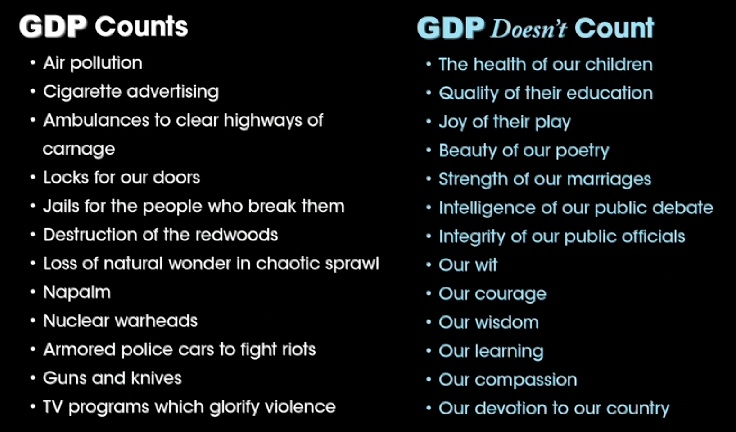
![[The fundamental benefit of trade]](P/trade480.jpg)
2009
- Steven Cowley: Fusion is energy's future (10 minutes)
- Rating: TTT (091226)
The current hope is that we will be able to produce electric power from fusion sometime in the 2030s. - Marc Pachter: The art of the interview (21 minutes)
- Rating: TTTT (091213)
"The key point was empathy, because everybody is really waiting for people to ask them questions so that they can be truthful about who they are and how they became what they are. Just be that way with your friends, particularly with the older members of your family." - Shereen El Feki: Pop culture in the Arab world (5 minutes)
- Rating: TTT (091213)
- Rory Bremner's one-man world summit (14.5 minutes)
- Rating: TTTT (091213)
Great immitations. - Rachel Pike: The science behind a climate headline (4 minutes)
- Rating: TTT
- Hans Rosling: Asia's rise -- how and when (16 minutes)
- Rating: TTTT (091123)
- John Gerzema: The post-crisis consumer (16 minutes)
- Rating: TTTT (091122)
This is about the good effects of the financial crisis. For exmaple, consumers are demanding openess and transparency. GoreTex think bosses are a bad idea and they make all expense reports public. - Rachel Armstrong: Architecture that repairs itself? (7 minutes)
- Rating: TTT (091122)
- Becky Blanton: The year I was homeless (7 minutes)
- Rating: TTT (091122)
- Itay Talgam: Lead like the great conductors (21 minutes)
- Rating: TTTT (091108)
- Willard Wigan: Hold your breath for micro-sculpture (19 minutes)
- Rating: TTT (091108)
- Rory Sutherland: Life lessons from an ad man (16.5 minutes)
- Rating: TTTT (091108)
Entertaining talk about the value of intangible value. - Stefana Broadbent: How the Internet enables intimacy (8.5 minutes)
- Rating: TTT (091107)
- David Deutsch: A new way to explain explanation (17 minutes)
- Rating: TTTT (091107)
Our progress was very slow until we learned the difference between a good eplanation and a bad one... - Garik Israelian: How spectroscopy could reveal alien life (16 minutes)
- Rating: TTT (091106)
The light from our sun contains 24000 spectral lines. 15% of them are still unexplained. In 5 years, we will be able to analyze the spectrums of earth-like planets in other solar systems. In 15-20 years we will be able to tell if there is life on such planets. - Marcus du Sautoy: Symmetry, reality's riddle (18 minutes)
- Rating: TTTT (091105)
About Évariste Galois (1811-1832), Alhambra and symmetry. There are only two objects with 6 symmetries. 6-3-2, 4-4-2. Rubik's Cube has ~2.1×1024 symmetries. - Julian Treasure: The 4 ways sound affects us (5.5 minutes)
- Rating: TTTT (091105)
The noise in an open plan office can reduce your productivity by 66%. Inappropriate retail soundscapes can reduce sales by 28%. - Sam Martin: The quirky world of "manspaces" (4.5 minutes)
- Rating: TTTT (091105)
Created by men with a passion. (Manspacesite.com) - Christiaan Baaij: CLasH: From Haskell to Hardware (19 minutes)
- Rating: TT (091028)
From the Haskell Symposium 2009. - Jean-Philippe Bernardy: Lazy Functional Incremental Parsing (26 minutes)
- Rating: TTT (091028)
From the Haskell Symposium 2009. - Lee Pike: Roll Your Own Test Bed for Embedded Real-Time Protocols: A Haskell Experience (18 minutes)
- Rating: TTT (091028)
From the Haskell Symposium 2009. - Max Bolingbroke: Types Are Calling Conventions (25 minutes)
- Rating: TTTT (091028)
From the Haskell Symposium 2009. - Eric Sanderson pictures New York -- before the City (16 minutes)
- Rating: TTTT (091026)
The Mannahatta project. - Paul Debevec animates a photo-real digital face (6 minutes)
- Rating: TTTT (091026)
Capturing structure, texture and motion. - Henry Markram builds a brain in a supercomputer (15 minutes)
- Rating: TTTT (091015)
He says we will be able to simulate a complete human brain within 10 years. - David Logan on tribal leadership (16 minutes)
- Rating: TTTT (091014)
Tribes (the groups that people naturally form) can be at five levels of culture.- (2%) Life sucks
- (25%) My life sucks
- (48%) I am great (and you are not)
- (22%) We are great
- (2%) Life is great
- Carolyn Steel: How food shapes our cities (15 minutes)
- Rating: TTTT (091011)
Interesting. - Beau Lotto: Optical illusions show how we see (16 minutes)
- Rating: TTT (091011)
Nothing new. But the IBM ad after was about the congestion charges (trängselskatt) in Stockholm, which reduced traffic by 22% and air pollution by 14%, and I learned that U.S. traffic causes 45% of the air pollution in the world. Stefan Sagmeister: The power of time off (17 minutes)
- Rating: TTT+ (091009)
He takes a sabbatical every 7 years. That's 12.5% off, but he things it still pays off by increasing the quality (and hence price) of his work. To do whatever you want. 3M gives employees 15% off. Google gives employess 20% off. (Job vs Career vs Calling) - Jonathan Zittrain: The Web as random acts of kindness (19 minutes)
- Rating: TTTT (090930)
The Internet infrastructure itself and things like the Wikipedia are good examples of the amazing things can be accomplished with neighborly friendliness and cooperation, without control, bureaucracy and corporate greed. - Neil Mitchell: Losing Functions Without Gaining Data - Another Look at Defunctionalisation (26 minutes)
- Rating: TTTT (090929)
From the Haskell Symposium 2009. - Atze Dijkstra: The Architectures of The Utrecht Haskell Compiler (30 minutes)
- Rating: TTTT (090929)
From the Haskell Symposium 2009. - Parag Khanna maps the future of countries (18 minutes)
- Rating: TTTT (090929)
- Tim Brown urges designers to think big (15 minutes)
- Rating: TTTT (090929)
- Oliver Sacks: What hallucination reveals about our minds (18 minutes)
- Rating: TTTT (090919)
The neurons in understimulated parts of the brain can start to fire spontaneously. This is why it is common for blind people to have visual hallucinations. By using fMRI, specific visual impressions can be associated with specific parts of the brain. There are parts devoted to recognizing cartoons, faces, buildings, cars, even different makes of cars, etc. (See also the talk by Ramachandran.) - Lewis Pugh swims the North Pole (19 minutes)
- Rating: TTTT (090917)
The water temperature is -1.7°C there and he swam 1km in 18.5 minutes. It took 4 months before he could feel his hands again. - Steve Truglia: A leap from the edge of space (15 minutes)
- Rating: TTTT (090917)
He wants to sky dive from 36600m in a space suit... - Evan Grant: Making sound visible through cymatics (5 minutes)
- Rating: TTT (090917)
- Bjarke Ingels: 3 warp-speed architecture tales (18 minutes)
- Rating: TTTT (090917)
Awesome Danish architecture. - John Lloyd inventories the invisible (10 minutes)
- Rating: TTTT (090916)
Very clever and amusing. I learned a new word: ignostic, meaning "I refuse to be drawn on the question on whether god exists until someone properly defines the terms". - Rebecca Saxe: How we read each other's minds (17 minutes)
- Rating: TTTT (090913)
There is a small region in the brain devoted to thinking about other people's thoughts, and it develops fairly slowly. You can tell the difference between 3, 5 and 7 year old children. - James Balog: Time-lapse proof of extreme ice loss (19 minutes)
- Rating: TTTT (090910)
- Josh Silver demos adjustable liquid-filled eyeglasses (5 minutes)
- Rating: TTT (090902)
Adjustable glasses for everyone? From the Centre for Vision in the Developing World. - Ethan Zuckerman: Internet Censorship: How Cute Cats Can Help (1 hour)
- Rating: TTTT (090830)
An interesting talk at Princeton in November 2008. - Natasha Tsakos' multimedia theatrical adventure (15 minutes)
- Rating: TTT (090829)
- Hans Rosling: Let my dataset change your mindset (20 minutes)
- Rating: TTTT (090827)
Fascinating, as always. - Dan Pink on the surprising science of motivation (18 minutes)
- Rating: TTTT (090825)
There is a mismatch between what science knows and what business does. For anything but trivial routine jobs, Autonomy (the urge to direct our own lives), Mastery (the desire to get better and better at something that matters) and Purpose (the yearning to do what we do in the service of something larger than ourselves) are better motivators and result in better performance than managers with carrots and sticks. (Encarta vs Wikipedia. ROWE.) - Eric Giler demos wireless electricity (10 minutes)
- Rating: TTTT (090825)
- Janine Benyus: Biomimicry in action (17 minutes)
- Rating: TTTT (090807)
Nature already has much better solutions to many problems than engineers try to solve with new technology. It is time we learn to consider those solutions every time we think about inventing something new. - Alain de Botton: A kinder, gentler philosophy of success (16 minutes)
- Rating: TTTT (090803)
Career crises. It is easier than ever to make a living, but harder than ever to stay free of career anxiety. Job snobbery. The opposite of a snob is your mother. Most people make a strict correlation between how much time/love/respect they are prepared to give you and your position in the social hierarchy. That's why we need careers and material status symbols (luxury items) even if we not necessarily materialistic. Someone with a Ferrary isn't greedy, but more likely vulnerable and in need of love. Meritocracy: people reach the top based on their merits and vice versa. This leads to more suicides, because we have no one to blame but our selves when things go wrong. But the justice meritocracy implies is impossible, too many things are random. About success: you can't be successful at everything. Also make sure you use your own definition of success, not someone else's. - Golan Levin makes art that looks back at you (15 minutes)
- Rating: TTTT (090803)
- Kevin Kelly on the next 5,000 days of the web (19 minutes)
- Rating: TTTT (090731)
- Jim Fallon: Exploring the mind of a killer (6 minutes)
- Rating: TTTT (090716)
- Go behind the scenes of a TEDTalk (6.5 minutes)
- Rating: TTTT (090715)
TED talks have evolved into a new unit of information: we have things like a 4 minute song, a 90 minute movie, a 5 page article, and now we have an 18 minute talk
.... the most important videos online right now
. I can only agree. - Stewart Brand proclaims 4 environmental 'heresies' (16 minutes)
- Rating: TTTT (090715)
Interesting perspecives on our world and the future. - Olafur Eliasson: Playing with space and light (9 minutes)
- Rating: TTT (090715)
- Tom Wujec on 3 ways the brain creates meaning (6 minutes)
- Rating: TTT (090712)
- Kary Mullis' next-gen cure for killer infections (4 minutes)
- Rating: TTT (090712)
A nobel price winner with a new way to help our immune defence kill bacteria. - Daniel Libeskind's 17 words of architectural inspiration (18 minutes)
- Rating: TT (090702)
- Gever Tulley teaches life lessons through tinkering (4 minutes)
- Rating: TTTT (090702)
The best way to learn! - Arthur Benjamin's formula for changing math education (3 minutes)
- Rating: TTT (090702)
His message, which was very popular with the audience, is to focus on statistics instead of calculus. - Paul Collier's new rules for rebuilding a broken nation (16 minutes)
- Rating: TTTT (090627)
- Katherine Fulton: You are the future of philanthropy (12 minutes)
- Rating: TTT (090627)
I learned a new word: philanthropreneur. Also, I like this quote:We have lived in this world where little things are done for love and big things for money. Now we have Wikipedia. Suddenly big things can be done for love. (Clay Shirky)
- Ray Zahab treks to the South Pole (5.5 minutes)
- Rating: TTTT (090627)
- Philip Zimbardo prescribes a healthy take on time (6 minutes)
- Rating: TTTT (090623)
One marshmallow now or two later? It is good to think about what influences your decisions more: the past, the present or the future? Negative or positive aspects? - Chris Hughes: Augmented reality made easy (2 minutes)
- Rating: TTTT (090623)
Cool video effects with only a web browser and flash. - Qi Zhang's electrifying organ performance (3 minutes)
- Rating: TTT (090619)
Wow, Yamaha Electone organs still exist! - Catherine Mohr: Surgery's past, present and robotic future (19 minutes)
- Rating: TTTT (090618)
- Jane Poynter: Life in Biosphere 2 (15 minutes)
- Rating: TTTT (090616)
- Richard St. John: "Success is a continuous journey" (4 minutes)
- Rating: TTTT (090616)
Success and money doesn't automatically bring happiness. "Money can't by happiness, but it can by prozac". If you forget to follow the 8 principles of success, things can go downhill fast... - Nancy Etcoff on the surprising science of happiness (19 minutes)
- Rating: TTTT (090616)
Looking at happiness from many perspectives. Interesting. - John La Grou plugs smart power outlets (4 minutes)
- Rating: TTT (090616)
- Robert Full: Learning from the gecko's tail (12 minutes)
- Rating: TTTT (090611)
- Pete Alcorn on the world in 2200 (3 minutes)
- Rating: TTT (090610)
- Ray Kurzweil: A university for the coming singularity (8.5 minutes)
- Rating: TTTT (090602)
Ray Kurzweil thinks computers will be powerful enough to simulate human brains and pass the turing test in 20 years. I can't wait! His slides contain many examples of exponential progress to support this prediction. - Michelle Obama's plea for education (12 minutes)
- Rating: TTT (090531)
- Ray Anderson on the business logic of sustainability (15 minutes)
- Rating: TTTT (090530)
- Seth Godin on the tribes we lead (17 minutes)
- Rating: TTTT (090530)
How to change everything (by leading a tribe): challange, culture, curiosity, connect, commit. Being a leader gives you charisma, you don't need it to become a leader. - Al Gore warns on latest climate trends (7 minutes)
- Rating: TTTT (090528)
He also shows some TV ads about clean coal and repowering America. - Carolyn Porco: Could a Saturn moon harbor life? (3 minutes)
- Rating: TTT (090528)
There are organic molecules, and evidence of water in contact with rock. - Jonathan Drori: Why we're storing billions of seeds (6 minutes)
- Rating: TTTT (090528)
3·109 seeds have been stored. 24000 speices have been preserved. Cost: $2800 per species. - Jay Walker on the world's English mania (4 minutes)
- Rating: TTT (090528)
A common language to solve common problems. - Joachim de Posada says, Don't eat the marshmallow yet (6 minutes)
- Rating: TTTT (090525)
Interesting and amusing! - Dan Ariely asks, Are we in control of our own decisions? (17 minutes)
- Rating: TTTT (090524)
Interestingly, adding a third inferior option influences which of two good options we prefer. Decisions are often cognitive illusions... - Sean Gourley on the mathematics of war
- Rating: TTT (090524)
- Mary Roach: 10 things you didn't know about orgasm
- Rating: TTT (090520)
- Hans Rosling on HIV: New facts and stunning data visuals
- Rating: TTTT (090516)
- Charles Leadbeater: The rise of the amateur professional
- Rating: TTTT (090509)
Insightful! Where did the mountain-bike come from? Consumers are often ahead of producers. Most creativity is cumulative and collaborative, so there is no distinct moment of invention, which is what the patent system assumes. Users are the source of big disruptive innovation. The big new ideas do not come from big corporations. Corproprations now use patents and copyright to prevent invetion from taking place, to protect their own business, i.e. a complete corruption of the original purpose of patent and copyright. - Bjorn Lomborg: Our priorities for saving the world
- Rating: TTTT (090509)
About the Copenhagen consensus. Top economists from the developed world and university students from all over came up with more or less the same list. - David Pogue: When it comes to tech, simplicity sells (21.5 minutes)
- Rating: TTTT (090505)
Very entertaining! In addition to delivering the important message indicated in the title and making fun of Microsoft, David Pogue sings about tech support, Bill Gates and Steve Jobs. - Brian Cox: What went wrong (and what's next) at the Large Hadron Collider
- Rating: TTT (090501)
- Al Seckel: Your brain is badly wired -- enjoy it!
- Rating: TTTT (090501)
Some cool optical illusions. - Alex Tabarrok: How ideas trump economic crises -- a surprising lesson from 1929
- Rating: TTTT (090501)
In a global economy, new ideas become more valuable because they are applicable to a greated market. Economic growth in the 1900s after the great depression exceeded predictions that could reasonably be made before it. - Sarah Jones: One woman, eight hilarious characters
- Rating: TTTT (090501)
- Laurie Garrett: What can we learn from the 1918 flu pandemic?
- Rating: TTT (090501)
- Dan Dennett: A secular, scientific rebuttal to Rick Warren
- Rating TTTT (090422)
He says "All the religions in the world should be taught in school, because democracy depends on informed consent.". Well, that has been done in Sweden since I was a kid (probably even longer), but I guess it won't happen in America until hell freezes over :-). Also, he likes Rick Warren's book, but has a problem with some of the things said in it, e.g. "Surrendered people obey God's word, even if it doesn't make sense". - Carl Honore: Slowing down in a world built for speed
- Rating: TTTT (090422)
There is a global backlash the against the culture that tells us that faster and busier is better. Slow food. Slow cities. Fewer working hours. Homework bans. Less is more. "You need to unplug, take time to recharge, so your brain can slide back into that creative mode of thought." "The nordic countries are showing that it is possible to have a kick-ass economy without being a workaholic. They now rank among the top 6 most competitive nations on earth, and they work the kind of hours that would make the average American weep with envy." - Rives: "If I controlled the Internet" (a poem)
- Rating: TTT (090422)
- Clay Shirky: Institutions vs. collaboration
- Rating: TTTT (090420)
Journalists vs bloggers. Photographers vs flickr. Microsoft vs Linux. Clay Shirky predicts 50 years of similar battles. (Which is not as bad as the printing press, which lead to 200 years of chaos...). Let's just hope the institutions under threat don't succeed in locking down the Internet. - Juan Enriquez: Beyond the crisis, mindboggling science and the arrival of Homo evolutis
- Rating: TTTT (090420)
Biology and technology might merge within our lifetime. Interesting... - Ray Kurzweil: How technology's accelerating power will transform us
- Rating: TTTT (090420)
The future will be here sooner than you think! - Aubrey de Grey: Why we age and how we can avoid it
- Rating: TTTT (090420)
- Margaret Wertheim: The beautiful math that links coral, crochet and hyperbolic geometry
- Rating: TTT (090420)
A talk on the importance of not relying just on symblic/algebraic methods, but also using concrete representations of abstract ideas. - Helen Fisher: The science of love, and the future of women
- Rating: TTTT (090415)
An interesting talk that covers a lot of ground. - Helen Fisher: The brain in love
- Rating: TTTT (090415)
"No wonder we have so many crimes of passion around the world", Helen Fisher says after using fMRI to study what goes on in the brain when you have been rejected by someone you really love. - Barry Schwartz: The paradox of choice
- Rating: TTTT (090415)
Too much choice makes us miserable. Everyone needs a (metaphorical) fish bowl. In 1983 when I went to America for the first time, I couldn't believe there was a whole isle with different kinds of milk in the super market. At home there was ony three kinds (regular, low fat, no fat), and I am happy the choices are still fairly limited (3 levels of fat, 2 brands, organic, lactose free). - JoAnn Kuchera-Morin: Tour the AlloSphere, a stunning new way to see scientific data
- Rating: TT (090415)
- A.J. Jacobs: My year of living biblically
- Rating: TTT (090415)
- Larry Burns: Reinventing the car
- Rating: TT (090414)
In this talk from 2005, Larry Burns from GM talks about how GM is committed to creating the car for the future, based on hydrogen fuel cells. But GM had their chance already in the 90s, and they blew it. The electric car they created then was a success, and even though the lucky few who got the chance to lease one wanted to buy their car and keep it, all the cars were recalled and destroyed. After hearing Shai Agassi talk about eletric cars, and seeing the situation GM is in today, it seems pretty obvious that neither GM nor fuel cells have a future. - Shai Agassi: A bold plan for mass adoption of electric cars
- Rating: TTTT (090414)
How do you run a whole country without oil? Ethanol? No! Hydrogen? No! Car 2.0 is an electric car. I really hope this takes off!Note added 2022-06-21: This idea failed. Shai Agassi's company Better Place went bankrupt in 2013.
- Bruce Bueno de Mesquita: Three predictions on the future of Iran, and the math to back it up
- Rating: TTT (090414)
Based on simple assumptions about human behavior and decision making, game theoretic models simulated in a computer can take more facts and relations into account than a human export, and let you make predictions that are more likely to be correct. - Renny Gleeson: Busted! The sneaky moves of anti-social smartphone users
- Rating: TTT (090411)
(3 minutes) An important message about mobile devices. - David Pogue: Cool new things you can do with your mobile phone
- Rating: TTTT (090411)
Don't miss his songs at the end: I want an iPhone. Also, another song, Imagine there's no Apple, was edited out from the TED video of this talk, but is included in the video at the EG. - Bonnie Bassler: Discovering bacteria's amazing communication system
- Rating: TTTT (090410)
I never heard about bacterial communication before. Very interesting! Very good speaker. From Princeton. - Ueli Gegenschatz: Fulfilling the dream of flight in a high-tech wingsuit
- Rating: TTTT (090410)
Cool! I never heard about wingsuits before. - Jacqueline Novogratz: From a Nairobi slum, a tale of hope
- Rating: TTT (090410)
Being poor doesn't mean being ordinary. - Jacek Utko: Can design save the newspaper?
- Rating: TTTT (090410)
Everybody can do it. We just need is inspiration, vision and determination. To be good is not enough. - Emily Levine: A trickster's theory of everything
- Rating: TTTT (090410)
There is a lot of depth below the humorous surface. - Ze Frank: What's so funny about the Web?
- Rating: TTTT (090329)
Funny guy! - Saul Griffith: Inventing a super-kite to tap the energy of high-altitude wind
- Rating: TTTT (090323)
5 minutes. Sounds great. What's the catch? - Dan Ariely: Why we think it's OK to cheat and steal (sometimes)
- Rating: TTTT (090321)
- Stuart Brown: Why play is vital -- no matter your age
- Rating: TTTT (090316)
A very interesting talk on how important play is for both humans and animals. - Dan Dennett: Cute, sexy, sweet and funny -- an evolutionary riddle
- Rating: TTTT (090316)
- Tim Berners-Lee: The next Web of open, linked data
- Rating: TTTT (090315)
Tim Berners-Lee shares Hans Rosling's plea: make all data available and link it together. Tear down the walls between the databases. - Mike Rowe: Celebrating work -- all kinds of work
- Rating: TTTT (090315)
Anagnorisis and peripeteia. Maybe Dirty Jobs is a TV show worth watching... - Pattie Maes & Pranav Mistry: Unveiling the "Sixth Sense," game-changing wearable tech
- Rating: TTTT (090315)
- Don Norman: The three ways that good design makes you happy
- Rating: TTTT (090315)
- Nalini Nadkarni: Unveiling the beautiful, fragile world of rainforest treetop ecosystems
- Rating: TTT (090314)
Her projects include using inmates to save moss and frogs in the Pacific Northwest. - Stephen Hawking: Asking big questions about the universe
- Rating: TTT (090228)
- Evan Williams: How Twitter's spectacular growth is being driven by unexpected uses
- Rating: TTT (090228)
Introduction to Twitter in 8 minutes. - Charles Moore: Sailing the Great Pacific Garbage Patch
- Rating: TTTT (090227)
After 50 years of "throwaway living", the oceans are full of plastic trash, harming both birds and fish, and we will never be able to clean it up... - Miru Kim: Making art of New York's urban ruins
- Rating: TTTT (090226)
She explores the unseen layers of our cities, i.e. underground tunnels and other abandoned areas that most people never see. She showed photos from in New York, Berlin, Paris and London. - Richard Pyle: Exploring the reef's Twilight Zone
- Rating: TTTT (090226)
- Bill Gates: How I'm trying to change the world now
- Rating: TTTT (090206)
Bill gates is optimistic that malaria can eliminated. But since malaria has already been eliminated from all the rich countries, more money is spent on baldness drugs than on fighting malaria. Another equally important problem to solve is the U.S. education system. The top 20% students in the U.S. are better than the top 20% in other places in the world, but the difference is getting smaller. The remaning 80% are weaker than the rest of the world and they are getting worse. In the U.S., 30% of all kids drop out of high school (50% among minorities).If you are low-income in the U.S., you have a higher chance of going to jail than you do of getting a [college] degree. That does not seem entirely fair.
Good teachers is the key ingredient in the solution to this problem. But good teachers aren't rewarded in the current system, and their skills are not spread. But KIPP schools are different. - Steven Pinker: A brief history of violence
- Rating: TTTT (090129)
In spite of what it seems like, based on many sources of statistics, and over many time scales, the world is more peaceful now than it ever has been. The trend will probably continue as globalization and technology allows our circles of empathy to grow larger and larger. - Noah Feldman: Politics and religion are technologies
- Rating: TTT (090129)
An passionate talk on the compatibility between democracy and Islam, given in February 2003, just before the U.S. invasion of Iraq. - Sergey Brin and Larry Page (Google co-founders): Inside the Google machine
- Rating: TTT (090129)
- Paula Scher: Great design is serious (not solemn)
- Rating: TTT (090128)
Her goal in life was to do stuff that wasn't made out of Helvetica.The best way to accomplish serious design is to be totally and completely unqualified for the job.
- Joseph Pine: What do consumers really want?
- Rating: TTT (090127)
First it was commodities. Then goods. Then services. Now, the new economy is about selling authentic experiences. But note that the Netherlands is no more authentic than Disney Land. - Bill Lange / David Gallo: New eyes on the wonders of the ocean
- Rating: TTTT (090126)
High-defenition video of life at 3000m below the surface. Only 3% of the oceans have been explored. - Jamais Cascio: Tools for building a better world
- Rating: TTT (090126)
Open knowledge and technology enabled global collaboration will save the planet. - Sherwin Nuland: A meditation on hope
- Rating: TTT (090126)
The word hope comes from the same indoeuropean root as curve. The word patient means sufferer and comes from the same indoeuropean root as compassion. The world is the patient and the audience (americans) are the healers. - Thomas Barnett: The Pentagon's new map for war and peace
- Rating: TTT (090119)
- Ford Model T - 100 Years Later
- Rating: TTTT (090118)
- Stefan Sagmeister: Yes, design can make you happy (15.5 minutes) and Things I have learned in my life so far (4.5 minutes)
- Rating: TTT+ (090116)
He shared som interesting insights. - Peter Hirshberg: The Web and TV, a sibling rivalry
- Rating: TTT+ (090114)
Intersting, but be prepared to be bombarded with historical tidbits... - Susan Savage-Rumbaugh: Apes that write, start fires and play Pac-Man
- Rating: TTTT (090112)
I had never heard of them before, but bonobo apes seem more human-like than chimpanzees... - Sir Ken Robinson: Do schools kill creativity?
- Rating: TTTT (090111)
A funny guy with an important message. - Erin McKean: Redefining the dictionary
- Rating: TTTT (090110)
Very entertaining. I learned some new words, like synecdochically, serendipity and erinaceous :-) - Vilayanur Ramachandran: A journey to the center of your mind (23 minutes)
- Rating: TTTT (090110)
Very interesting talk about how the brain works and how different parts of the brain interact to create our experiences. For exmaple, creativity and the ability to think in metaphores depend on cross-wiring between different parts of the brain, which, due to genetic differences, are much more extensive in some families than in others. - George Smoot: The design of the universe
- Rating: TTTT (090110)
On a large scale, taking dark matter into account, the universe looks more like a web than a random collection of galaxies. George smooth shows how simulations from simple ingredients with small random fluctuations develop into a universe that fits with what we can see with the Hubble space telescope and other instruments. - Phil Schiller: Macworld 2009 Keynote Address
- Rating: TTT+ (090110)
Face recognition and geotagging in iPhoto 09. New cool video editing functionality in iMovie 09. All music sold in the iTunes store will be DRM free! - Stephen Petranek: 10 ways the world could end
- Rating: TTT (090107)
- Brian Greene: The universe on a string
- Rating: TTTT (090107)
The superstring theory requires a universe with 10 dimensions of space, not just the 3 dimensions of space that we can see. If energy dissapears in particle collisions in the Large Hadron Collider, it could confirm that these extra dimensions are real, and not just a mathematical construction. There is a problem, though: Patricia Burchar said that missing energy could confirm the existence of dark energy and dark matter. But I guess the superstring theory would have to explain dark energy & and matter, so it will all fit nicely together... - Brian Cox: An inside tour of the world's biggest supercollider
- Rating: TTTT (090107)
- Rob Hubbard Interview (4 minutes)
- Rating: TTT (090101)
A 4 minute talk with legendary Rob Hubbard, who composed a lot of classic game tunes, especially on the C64.
2008
- Jennifer 8. Lee: Who was General Tso? and other mysteries of American Chinese food
- Rating: TTT (081224)
There are over 40,000 Chinese restaurants in America, more restaurants than McDonalds, Burger King, KFC & Wendy's have together. Even though there is no central control, Chinese restaurants are remarkably similar. (Most of them serve beef with broccoli, although broccoli is not a Chinese vegetable. Most of them also fortune cookies, which are unknown in China.) Chinese restaurants in this sense corresponds to open source software (Linux) while McDonalds and the like correspond to proprietary software (Microsoft). Finally I understand why I like Chinese food more than burgers... :-) - Susan Blackmore: Memes and "temes"
- Rating: TTT (081224)
Evolution is inevitable, provided a small number of key factors are present. On earth, evolution was first based on the replication of selfish genes. Then, evolution on a second level was added, with the replication of selfish memes. It makes sense to to also talk about a third level of evolution: temes (pieces of technology). At present, temes depend on the two lower levels for replication, but with technology is improving, they might soon start to replicate and evolve on their own... - Yochai Benkler: Open-source economics
- Rating: TTT (081224)
- Nicholas Negroponte: Bringing One Laptop per Child to Colombia
- Rating: TTTT (081224)
- Steven Strogatz: How things in nature tend to sync up
- Rating: TTT (081223)
About the simple rules that explain the behaviour of a school of fish, a flock of birds, blinking fire flies and a bridge in London. - Rick Warren: Living a life of purpose
- Rating: TTTT (081218)
30.000.000 copies sold. It must be a really good book! - Peter Donnelly: How juries are fooled by statistics
- Rating: TTTT
Without even realizing it, we often get it wrong when reasoning in the presence of uncertainty. - Richard St. John: Secrets of success in 8 words
- Rating: TTTT
500 interviews during 7 years, summarized into 8 words, explained in 3 minutes. - Richard Dawkins: The universe is queerer than we can suppose
- Rating: TTTT
- Richard Dawkins: An atheist's call to arms
- Rating: TTTT (081219)
If I am right, high office in the greatest country in the world is barred to the very people best qualified to hold it. To put it bluntly, American political opportunities are heavily loaded against those who are simultaneously intelligent and honest. I am not a citizen of this country, so I hope it won't be thought unbecoming if I suggest that something needs to be done.
- Robert Wright: How cooperation (eventually) trumps conflict
- Rating: TTT
- Arthur Benjamin: Lightning calculation and other "Mathemagic"
- Rating: TTTT (081210)
Who knew squares could be so much fun :-) - Patricia Burchat: The search for dark energy and dark matter
- Rating: TTTT (081205)
A talk that makes some mysterious things easy to understand. - Philip Rosedale: Second Life, where anything is possible
- Rating: TTT (081203)
The talk about the motivation behind Second Life reminds me of what got me hooked on computers when I was a teenager. - Robin Chase: Getting cars off the road and data into the skies
- Rating: TTT
- Hans Rosling: New insights on poverty and life around the world
- Rating: TTTT (081107)
Another great talk by Hans Rosling. In addition to the informative, colorful animated bubbles, this talk also involves a sword! :-) - Hans Rosling: Debunking third-world myths with the best stats you've ever seen (20 minutes)
- Rating: TTTT (081030)
Thanks to statistics and clever visualization techniques, you can probably learn a lot more about health and development in the world from this 20 minute talk than you learned about it from years in school. - James Howard Kunstler: The tragedy of suburbia
- Rating: TTTT (081106)
After living in America for 5 years, it is nice to see that it's not just me: even people who understand architecture and urban planning are appalled that there there are so many places (38,000 according to Kunstler) where no one wants to be, places not worth caring about. - Jane Goodall: Helping humans and animals live together in Africa
- Rating: TTTT (081106)
Hearing Jane Goodall talk is amazing. It is reassuring to hear someone with her experience say that she is still inspired and full of hope that it is not too late to make the world a better place for everyone. (Two programs that she talks about here are Take Care and Roots & Shoots.) - Jonathan Haidt: The real difference between liberals and conservatives
- Rating: TTTT (081106)
Mihaly Csikszentmihalyi: Creativity, fulfillment and flow (19 minutes)
- Rating: TTT (081028)
Our material well-being has increased a lot in the last century, but how happy we are has not changed that much. So what is it that makes our everyday life meaningful and worth living? This talk describes how two factors determine whether you feel worried, bored, relaxed, in control or "in the flow" (being creative).On a related note: The 8-Hour Workday Doesn't Really Work.
- Benjamin Wallace: Does happiness have a price tag?
- Rating: TTT
- Dan Gilbert: Why are we happy? Why aren't we happy?
- Rating: TTTT (081027)
When we have the freedom, we make choices according to what makes us happy. But when we don't have a choice, our brains can synthesize happiness.If you go out on a date with a guy and he picks his nose, you don't go out on another date. If you are married to a guy and he picks his nose... you find a way to be happy with what's happened.
- Garrett Lisi: A beautiful new theory of everything
- Rating: TTTT (081027)
If the Large Hadron Collider offers further evidence that all the elementary particles and their interaction can be beautifully characterized by the largest exceptional Lie group E₈, it is not entirely unreasonable to conclude that god was a mathematician :-) - John Hodgman: A brief digression on matters of lost time
- Rating: TTTT (081026)
High precision humor :-) - Jill Bolte Taylor: My stroke of insight
- Rating: TTT (081025)
A brain scientist describes what it was like having a stroke. - Lawrence Lessig: How creativity is being strangled by the law
- Rating: TTTT (080906)
A great talk (19 minutes) by Lawrence Lessig, about culture and copyright. Regarding the difference between kids and the older generation he says: We need to recognize, you can't kill the instinct that technology produces, we can only criminalize it. We can't stop our kids from using it, we can only drive it underground. We can't make our kids passive again, we can only make them "pirates". Is that good? We live in this weird time, let's call it the age of prohibitions, where in many areas of our life, we live life constantly against the law. Ordinary people live life against the law. And that's what we are doing to our kids, they live life knowing that they live it against the law, and that realization is extraordinarily corrosive, extraordinarily corrupting. And in a democracy, we ought to be able to do better - Michael Wesch: An anthropological introduction to YouTube
- Rating: TTT (080906)
A very entertaining presentation that also is also food for thought. While the web started out by hyperlinking text, it is now linking people through the sharing of user generated content on sites like YouTube and social networking on sites like Facebook. Our politicians respond these phenomena by proposing stricter regulations, require ISPs to keep record all communication patterns and filter "illegal" content, when we really need to rethink things like copyright, authorship, identity, ethics, governance, commerce and privacy. We have to get it right, to save our kids from growing up in a society where they will be breaking the law every day, just by living a normal life. - Fredrik Härén om kunskap, del 2 (34 minutes)
- Rating: TTTT (080427)
Fredrik Härén is telling us, in an entertaining way, that if we (the "developed" countries) don't open our eyes to the changes in the world around us (the "developing" countries), we will soon start to lag behind. For example, in Zimbabwe, which has been rated the worst country in the world to live in, you can pay your gardener by sending an SMS to his cell phone. When will that be possible in "developed" countries like Sweden?